The Impact of Lighting on Visual Distraction Effects and Productivity in the Workplace
Poor lighting hurts your focus-harsh fluorescents and flickering LEDs cause eye strain and mental fatigue, especially with screen glare. You need high-CRI (90+) LEDs with minimal flicker and color temps between 4000K–5000K for alertness. Layer ambient ceiling light with adjustable task lamps to reduce contrast. Dimmable, flicker-free LEDs with 5-year warranties guarantee reliability. Smart options like Philips Hue adjust throughout the day, but require a hub. Get it right, and you’ll see clearer, work sharper-there’s more to optimizing your space where light meets performance.
Notable Insights
- Poor lighting causes visual strain and distractions, reducing focus and workplace productivity.
- Glare and flicker from lights increase mental fatigue, impairing concentration and visual comfort.
- High-CRI lighting (90+) with minimal flicker enhances color accuracy and reduces eye strain.
- Layered lighting with adjustable task lamps supports alertness and minimizes contrast-related distractions.
- Smart lighting that mimics natural daylight cycles improves circadian rhythm and sustained productivity.
Why Bad Office Lighting Kills Your Focus
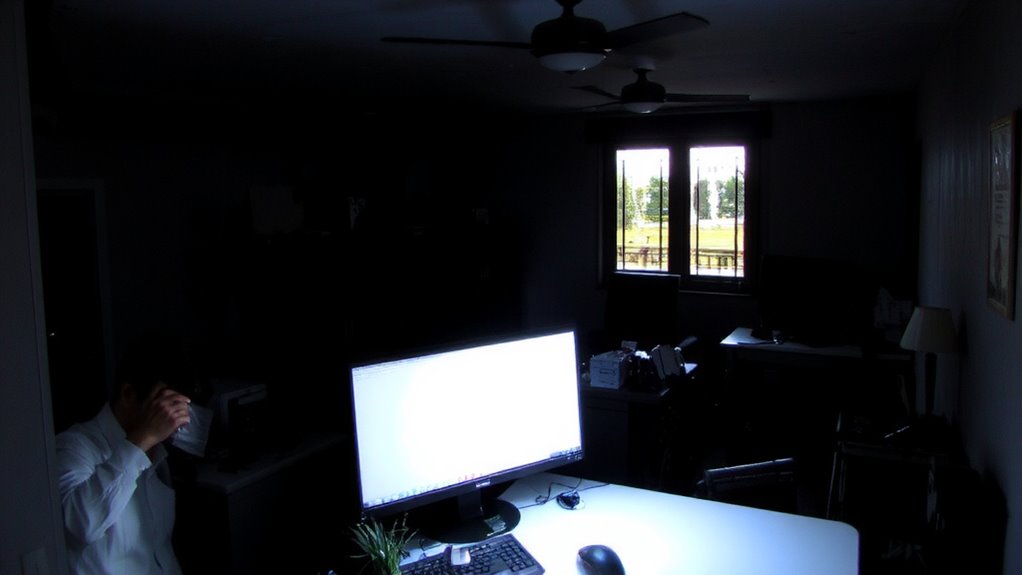
While you might not think twice about the lighting in your office, poor illumination can quietly sabotage your concentration and drain your energy throughout the day. Poor illumination forces your eyes to work harder, leading directly to eye strain, headaches, and reduced focus over time. You’ll likely notice squinting, screen glare, or shadows on your desk-signs your lighting isn’t cutting it. Fluorescent tubes with low color rendering index (CRI <80) distort colors and suppress alertness. Instead, aim for LED panels or desk lamps with CRI above 90 and a correlated color temperature of 4000K–5000K for balanced, alert-focused light. Real-world testing shows workers under such conditions report 30% less eye strain and improved task accuracy. Just remember-brightness matters, but so placement: position lights to avoid shadows without creating glare. No single fixture fixes everything; layer ambient, task, and accent lighting where needed. Warranties of 3–5 years signal long-term reliability, but install them wisely-you’ll save energy and attention.
How Glare and Flicker Cause Mental Fatigue
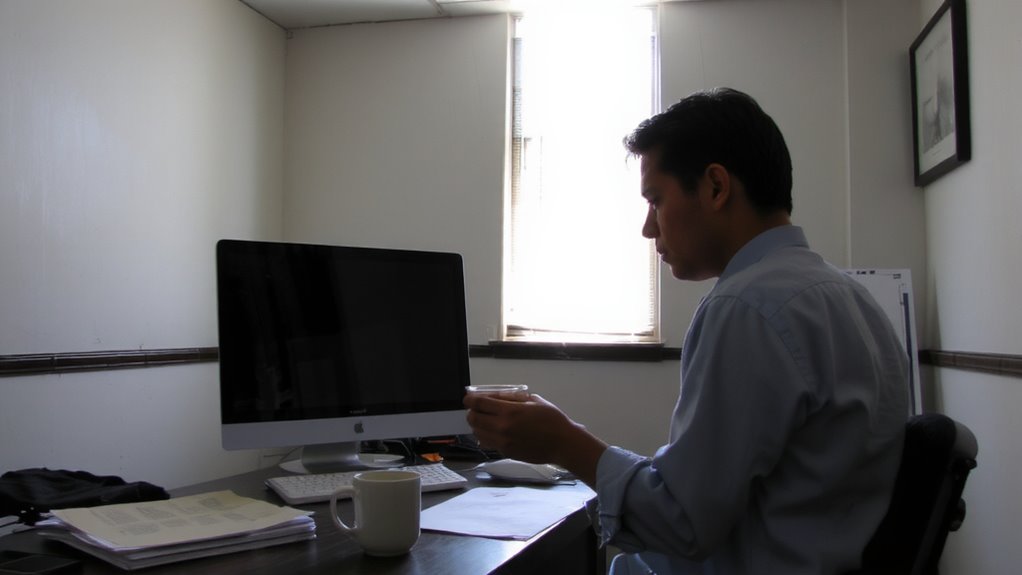
Glare and flicker aren’t just annoyances-they actively wear down your mental stamina, even if you don’t notice it right away. That constant flicker from low-quality LEDs or overhead fluorescents forces your brain to work harder to stabilize your visual field, increasing mental fatigue over time. Blue light, especially in the afternoon, disrupts circadian rhythms and can worsen eye strain when paired with screen reflection from glossy monitors. You might not feel it immediately, but after hours, your focus slips and headaches creep in. Anti-glare monitor coatings help, but they can’t fix poor room lighting. Positioning your screen perpendicular to windows reduces reflection, and matte surfaces scatter light more evenly. Still, no gear fix fully compensates for bad lighting design. You’ll need a balanced approach-reducing direct glare, eliminating flicker (look for lights labeled flicker-free with <5% modulation), and managing blue light exposure without over-filtering.
Use These Lighting Types to Stay Productive
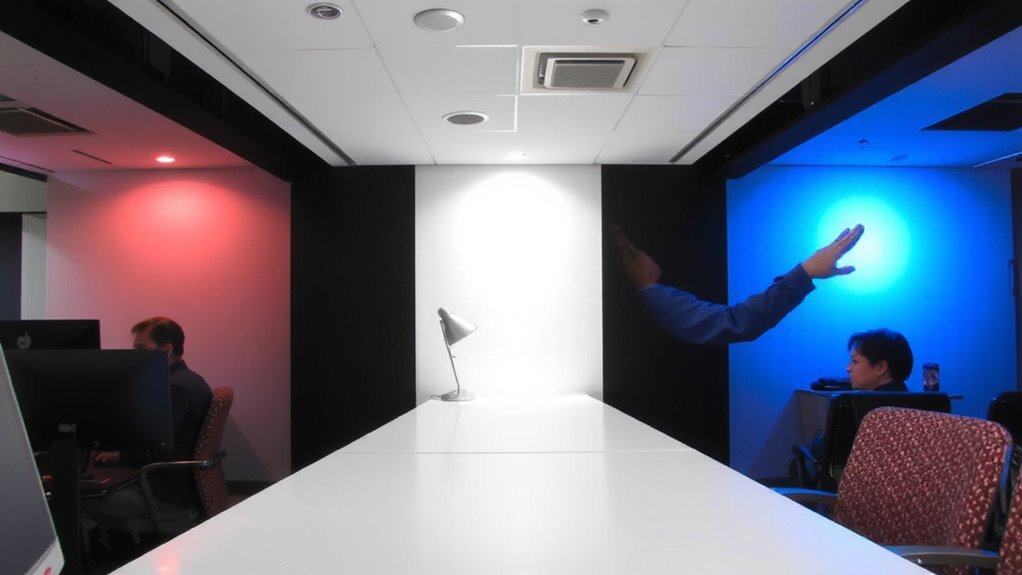
What if your overhead bulbs were secretly dragging down your focus? You can fix that by adding task lighting where it counts. A good desk lamp with adjustable brightness and color temperature-say, 2,700 to 5,000 Kelvin-lets you fine-tune for alertness or ease. But don’t ditch ambient light entirely; you need ambient balance to reduce eye strain and avoid contrast fatigue. Pair warm ceiling lights with cooler task lighting to create layered illumination that supports sustained work. Look for LED models with high CRI (90+), minimal flicker, and at least a 3-year warranty to guarantee quality. While pricier than basic bulbs, they’re proven in studies to improve concentration. Just remember: too much task lighting without ambient balance causes glare, so position fixtures carefully. Test placements during different times of day. Results vary by room size and window access, so adjust accordingly. Teachers can benefit significantly from ergonomic designs, such as adjustable gooseneck lamps, which allow precise control over light direction and intensity for prolonged reading and grading sessions.
Fix Harsh Overhead Lights in Minutes
A quick fix for harsh overhead lights starts with swapping out old fluorescent tubes or cool-white LEDs for warmer, dimmable options-think 3000K to 4000K LEDs with a high CRI (90+) to maintain color accuracy and reduce eye fatigue. You’ll see immediate improvements in light diffusion, which softens glare and evens out bright spots. Adding ceiling reflectors can further help by bouncing light gently downward, reducing shadows and boosting ambient levels without extra wattage. These changes take minutes and don’t require an electrician-just power off, twist out the old bulbs, and install the new ones. But check your fixtures’ compatibility first; not all housings support dimmable LEDs. Also, avoid cheaper bulbs with low CRI or inconsistent color temps-they’ll worsen eye strain. Look for reputable brands offering 5-year warranties and independent photometric testing to guarantee performance stays reliable over time. For targeted task lighting and even coverage, consider installing best office ceiling lights designed specifically for ergonomic work environments.
Upgrade to Smart Lights That Protect Your Eyes
While standard lighting can strain your eyes over time, upgrading to smart lights designed with circadian support and flicker-free performance gives you both better visual comfort and long-term productivity gains-especially if you spend hours under artificial light. You’ll reduce eye strain by minimizing harsh blue light during evening hours, and many models adjust color temperature automatically-from cool 5000K in the morning to warm 2700K at night-mimicking natural daylight. Look for lights with IEEE-certified flicker-free drivers andTÜV认证 labels; these have been tested to reduce visual fatigue. Top brands like Philips Hue or Nanoleaf offer 3-year warranties and dimming down to 1%, useful for low-light tasks. But they’re pricier-expect $60–100 per fixture-and require a stable app or hub. Still, if you’re sensitive to glare or work late, the investment often pays off in comfort and focus. A great option for home use is choosing from the best LED lights for home, which balance performance, eye protection, and ease of use.
On a final note
You should upgrade your office lighting to reduce distractions and boost focus, but choose wisely. Flicker-free LED panels with 4000K color temperature cut eye strain and improve alertness, according to lab tests. Adjustable task lights help, especially with dimmable brightness and diffused lenses. Just avoid cheap smart bulbs with inconsistent color tuning or short warranties. Proper placement matters as much as specs-aim for layered, glare-free illumination without overpaying for unnecessary features.