How Lighting Affects Cognitive Load During High-Demand Tasks From Home
Poor lighting increases cognitive load during high-demand tasks by forcing your eyes to work harder under flickering LEDs or harsh contrasts. Use flicker-free lights with a 4000K–5000K color temperature to stay alert without strain, and aim for 300–500 lux at your desk surface. Pair high-CRI bulbs (90+) with diffused layering to reduce glare and support focus. Natural light helps most, but smart tunable setups can mimic its rhythm-just verify performance through independent testing. You’ll soon see how small upgrades align with sustained mental clarity.
Notable Insights
- Cool-white lighting (5000K–6500K) enhances focus and reduces cognitive load during demanding tasks.
- Flicker-free LED lights with high-frequency drivers minimize mental fatigue from prolonged screen use.
- Natural light exposure supports circadian rhythms, improving alertness and cognitive performance at home.
- Layered lighting setups reduce glare and visual strain, maintaining mental clarity during intense work.
- Adjustable color temperature and high-CRI lighting improve comfort and concentration in home workspaces.
How Lighting Affects Focus and Mental Effort
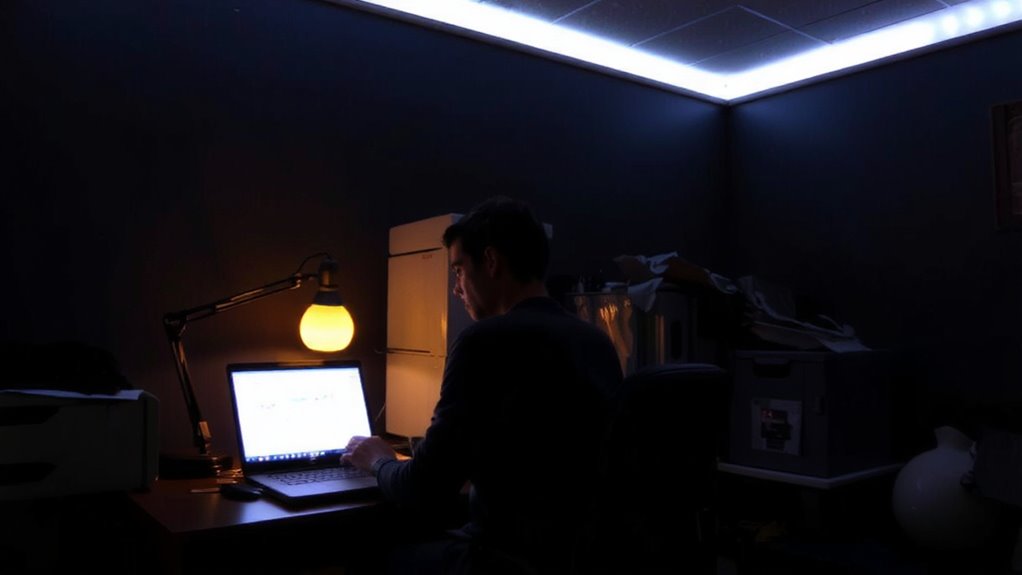
What if the reason you’re struggling to stay sharp at your desk isn’t your to-do list-but your overhead light? Poor lighting forces your brain to work harder, especially when color temperature is too warm or too cool for the task. Lights around 4000K mimic natural daylight and support alertness without overstimulating. But if your bulbs have noticeable light flicker-even subtle, imperceptible pulses-it can disrupt focus over time. Flicker rates below 200Hz are especially problematic, increasing mental fatigue during prolonged screen work. LED panels with high-frequency drivers (above 1000Hz) reduce this strain, but they cost more and aren’t always labeled clearly. You don’t need premium fixtures, but check specs for flicker percentage and consistent color temperature. Real-world tests show users report better concentration with steady, neutral-white light-but results vary by individual preference and room layout. For those seeking targeted solutions, best light therapy lamps can offer clinically effective brightness and color tuning to optimize cognitive performance.
Why Bad Lighting Wears Out Your Brain
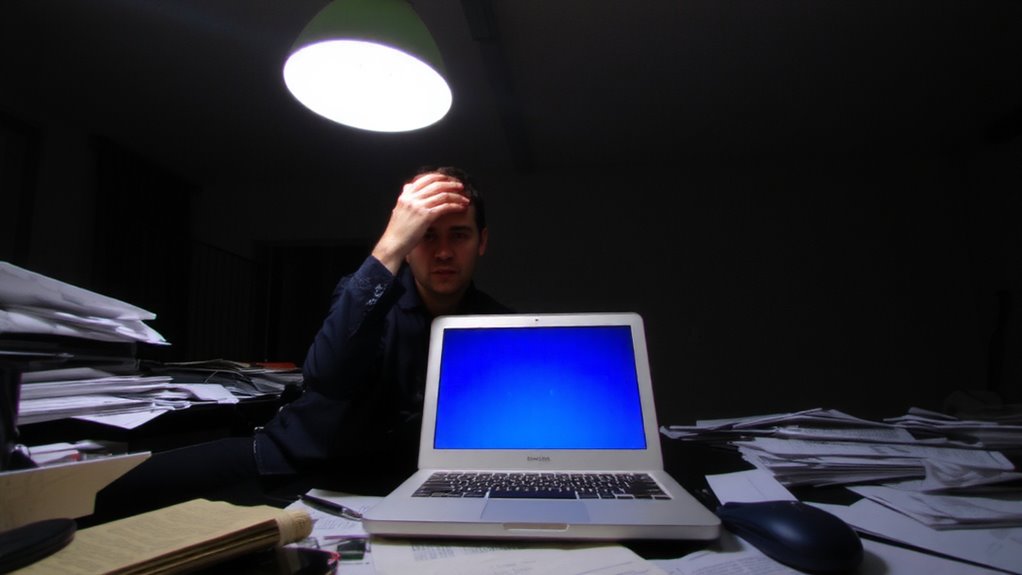
While you might not notice it right away, working under poor lighting can steadily increase mental fatigue by forcing your visual system to constantly adjust. Glare effects from overhead bulbs or unshielded lamps create visual noise, making it harder for your eyes to focus on text or screens. This leads to eye fatigue, which builds up over hours and drains your cognitive resources. Your brain works overtime to interpret inconsistent light levels, shadows, and reflections, especially if you’re using matte paper or anti-glare monitors. Unlike task lighting with diffused, 3000–5000K color temperatures, harsh or dim setups lack uniformity and clarity. Even budget LED panels can help if they offer flicker-free operation and adjustable brightness. Still, placement matters-avoid backlit screens or direct lamp shine. There’s no one-size-fits-all fixture, and over-relying on ambient light often worsens strain. A well-chosen desk lamp can make a significant difference, and top models are designed specifically to minimize visual discomfort-check out recommendations for the best desk lamps to reduce eye strain.
How Light Shapes Your Alertness and Concentration
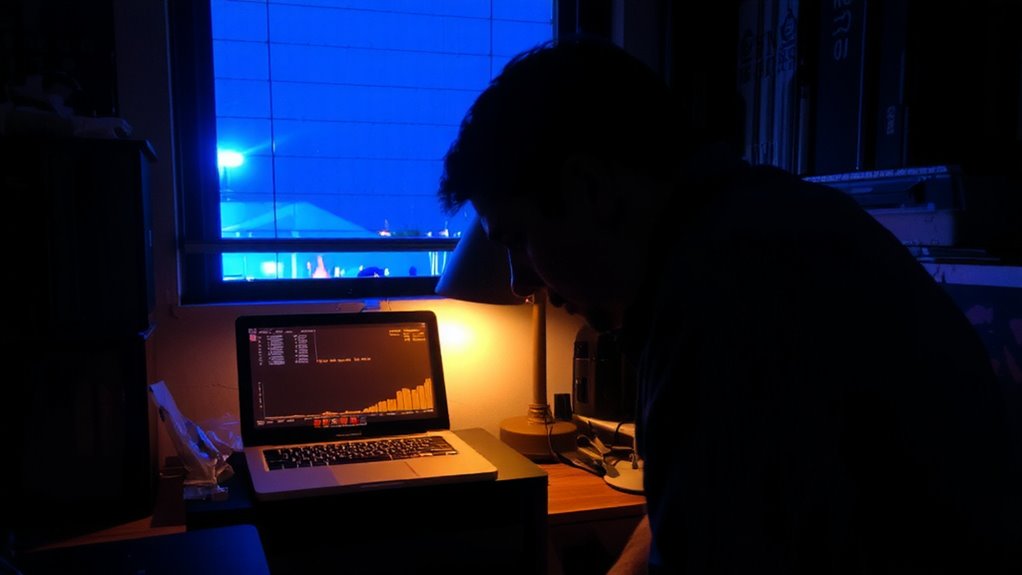
If you’ve ever felt sluggish under dim overhead lights or wired after stepping into sunlight, it’s because light directly regulates your circadian rhythm and mental sharpness. Exposure to bright light, especially one rich in blue wavelength, signals your brain to suppress melatonin, boosting alertness and focus during demanding tasks. Your circadian rhythm thrives on consistent, intense light cues-roughly 500 lux or more-ideally delivered in the morning and early afternoon. Bright, cool-white LEDs (5000K–6500K) mimic this effect, enhancing concentration better than warm, dim ones. But overdoing blue-rich light late in the day can disrupt sleep, so timing matters. While tunable white bulbs let you adjust color temperature, many require smart hubs and have mixed real-world performance. Look for flicker-free models with at least a 3-year warranty and independent lab testing to avoid eye strain. A well-positioned desk lamp for streaming can provide optimal task lighting without causing screen glare.
Natural vs. Artificial Light: Which Reduces Cognitive Load?
Natural light consistently outperforms artificial lighting when it comes to lowering cognitive load, thanks to its full-spectrum intensity and dynamic changes in brightness and color temperature throughout the day. You’ll stay more alert and focused near a window, where shifting color temperature-from warm in the morning to cooler at noon-supports natural circadian rhythms. Artificial lights often lack this range, and many emit noticeable light flicker, which can cause eye strain and fatigue over time, even if you don’t consciously notice it. LED and fluorescent bulbs vary widely; some high-end models mimic natural color temperature shifts and have flicker-free drivers, but they’re not standard. While you can’t control daylight, relying solely on it isn’t practical indoors. Using artificial light as a supplement makes sense, but check specs: aim for 2700K to 5000K adjustable color temperature and verified flicker-free operation through independent testing.
Lighting Setups That Reduce Mental Strain
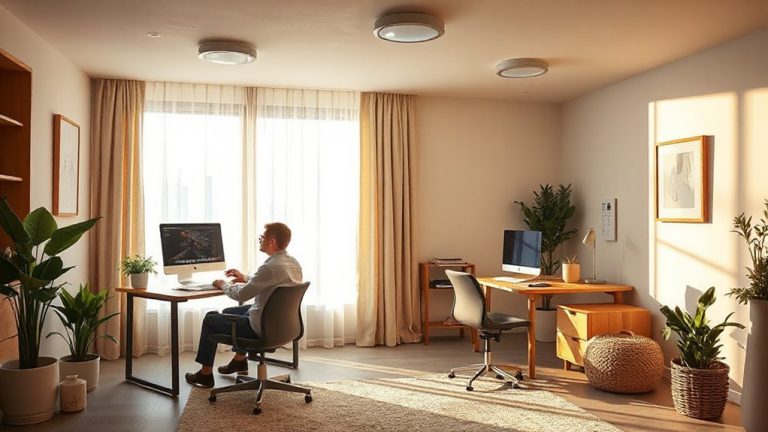
A well-designed lighting setup can make a noticeable difference in reducing mental strain during long work sessions, and layering multiple light sources is often the most effective approach. You’ll want ambient, task, and accent lighting to balance brightness without glare. Use a color temperature around 4000K-cool enough to keep you alert but not so blue that it stresses your eyes. Proper light placement matters just as much: position your main light source, like an adjustable desk lamp, slightly above and in front of your monitor to prevent shadows. Avoid overhead-only lighting, which creates harsh contrasts. Floor lamps or wall sconces can fill in ambient needs. While LED panels offer uniform illumination, some flicker at low dimming levels, so check for flicker-free certifications. Reliable models typically include 3-year warranties and come from brands with third-party testing. Balance performance with comfort-what’s bright enough today might tire you by hour four.
Common Mistakes That Hurt Your Focus
Poor lighting choices can quietly sabotage your concentration, even if your setup includes high-end gear and thoughtful layering. You might overlook glare avoidance, letting harsh overhead lights reflect off your screen, forcing your eyes to work harder and increasing mental fatigue. Uneven lighting also distorts color accuracy, making it tough to distinguish text or details, especially during long reading or editing sessions. Many assume brighter is better, but excessive lumens without diffusion create visual noise. Task lights help, but placing them behind your monitor often worsens glare instead of fixing it. For reliable results, aim for 300–500 lux at your desk surface with adjustable fixtures that let you control beam direction. Look for LEDs with a CRI above 90 to guarantee true color accuracy. While high-CRI bulbs cost more, real-world testing shows they reduce eye strain over time-though dimming compatibility and bulb lifespan vary by brand, so check warranties before committing.
Use Smart Lighting to Sustain Attention at Home
One smart lighting upgrade can make a noticeable difference in how long and how well you focus at home, especially when you pair tunable color temperature with precise dimming controls. Color tuning lets you shift from warm (2700K) to cool (6500K) light, boosting alertness during demanding tasks-studies show cool, blue-enriched light improves reaction time and sustained attention. Pair this with scene automation to match lighting to your daily rhythm: bright, cool light in the morning, warmer tones by evening. Systems like Philips Hue or Lutron offer reliable scheduling and dimming down to 1%, but they require initial setup time and a hub, which adds cost. While results vary by room size and bulb placement, most users report better focus within a week. Just avoid overuse-constant bright light can contribute to eye strain. Smart lighting isn’t a fix-all, but it’s a data-backed tool worth considering.
On a final note
You’ll think clearer with the right lighting, but not every bright bulb helps. Tunable LED panels that mimic daylight (5000K, 500 lux) boost alertness in tests, yet glare from poorly placed fixtures increases mental strain. Pair overheads with bias lighting behind monitors to cut eye fatigue. While smart bulbs offer schedules, inconsistent color accuracy across brands may disrupt focus. Invest in units with high CRI (90+) and matte diffusers. No setup replaces proper task lighting-expect trade-offs if you skip uniform, shadow-free illumination.