Using Feng Shui Principles to Optimize Your Home Office Layout for Success
Position your desk diagonally across from the door, with a solid wall behind you-it gives you control and clear sightlines, reducing subconscious stress. Clear clutter first; papers and cords block energy and focus. Use a chair with lumbar support (26–30 inches height) and leave space behind you for mental ease. Add a snake plant or pothos near a window for fresh air and natural light, but don’t overcrowd surfaces. Stick to blues and greens, use 5000K lighting for alertness, and apply the Bagua map to align your space with goals-just avoid overloading zones with too many objects. Smart tweaks like these can sharpen your work rhythm, and there’s more to fine-tune once you see what fits your flow.
Notable Insights
- Position your desk in the command position, diagonally opposite the door, for maximum visibility and control.
- Keep your desk clutter-free to clear energy blockages and enhance mental clarity and productivity.
- Align your desk perpendicular to the door with a solid wall behind it to support focus and security.
- Incorporate natural elements like plants and natural light to improve air quality and reduce mental fatigue.
- Use calming colors like blue and green, full-spectrum lighting, and Bagua map zones to energize key life areas.
Take the Command Position to Claim Your Power Spot
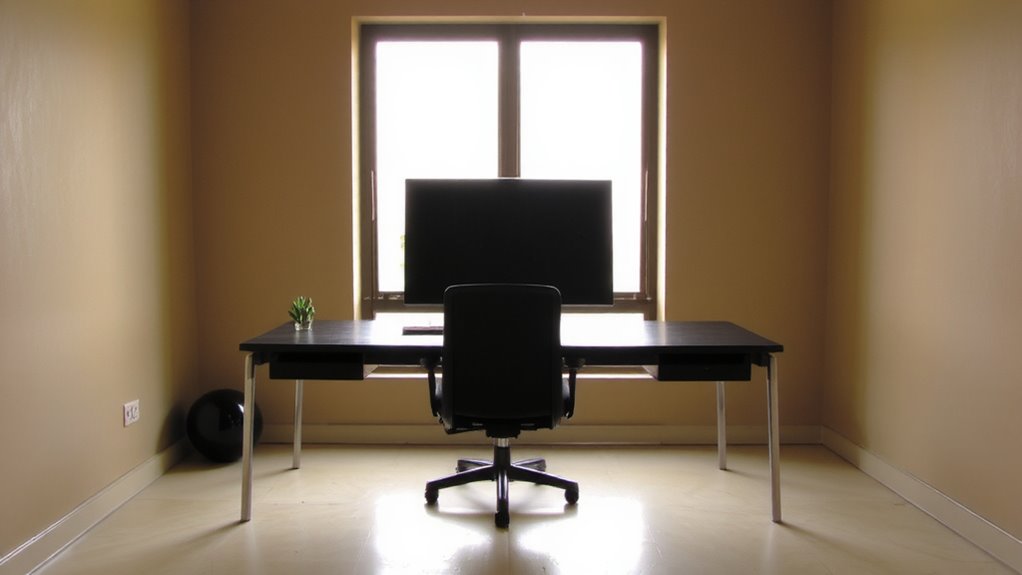
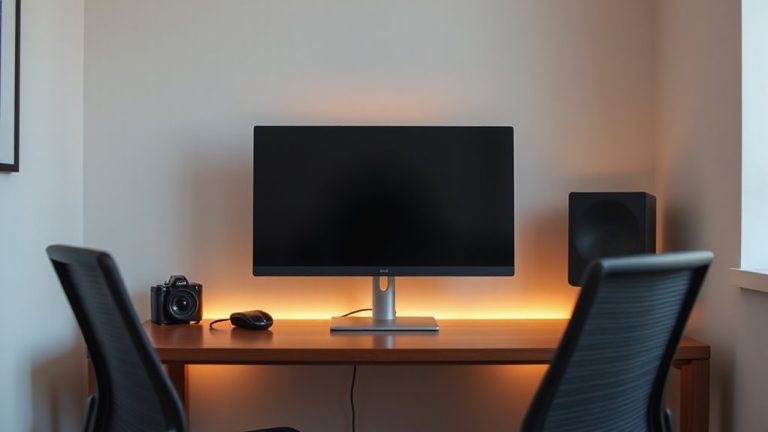
Where should you place your desk for maximum focus and control? Put it in the *command position*-diagonally opposite the door, with a solid wall behind you. This setup boosts your command presence, letting you see who enters while feeling secure. It’s not about controlling others, but managing power dynamics with confidence. You’ll feel more alert and composed, especially during calls. Avoid placing your desk facing a wall-it limits perspective-or with your back to the door, which creates unease. While corner placements save space, they can compress energy and reduce focus. Test it: sit, turn, and check sightlines to the door and room. You want visibility without distraction. This isn’t about mysticism-it’s about spatial psychology proven in office layouts. Results vary by room shape and lighting, so adjust as needed. Some trade-offs exist with smaller rooms, but the principle holds.
Clear Clutter First to Unblock Energy and Focus
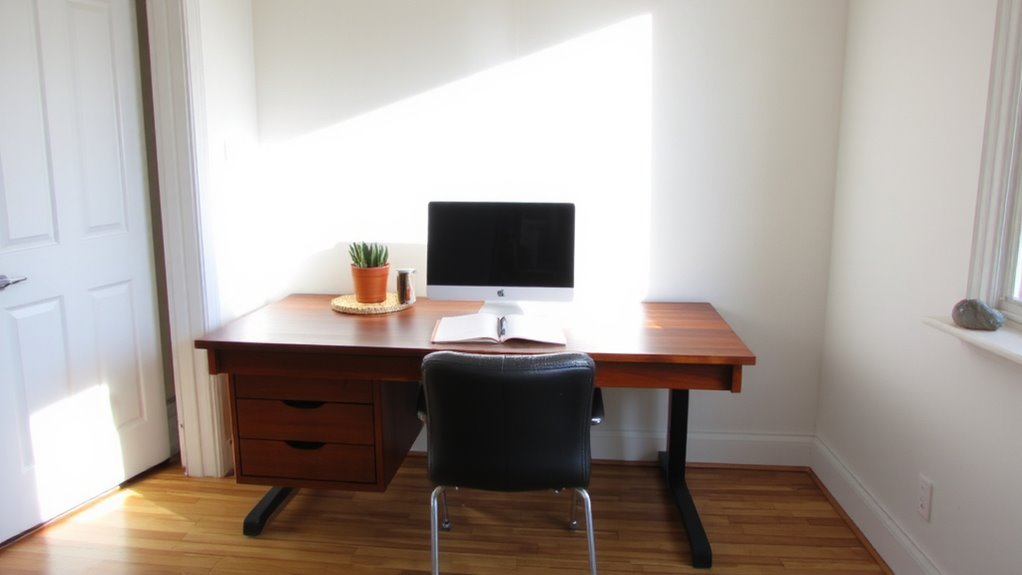
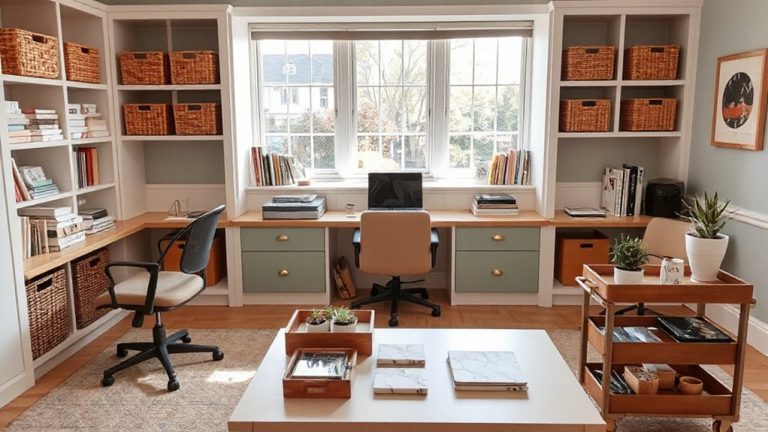
Start with a blank slate-clearing clutter isn’t just a tidy-up chore, it’s the foundation for sharper focus and smoother workflow. You’re fighting an energy blockage every time papers pile up or cords tangle under your desk. That buildup doesn’t just look bad; it actively undermines your mental clarity. When surfaces are crowded, your brain works harder to filter distractions, slowing decision speed and accuracy. Remove non-essentials: old notebooks, broken peripherals, unused adapters. Store necessary items in labeled drawers or fabric bins to maintain visual calm. Don’t mistake minimalism for impracticality-some gear is unavoidable, but position it neatly. A clutter-free space supports consistency, but it requires daily upkeep. There’s no one-size-fits-all storage fix; what works depends on your room size, desk dimensions, and usage habits. Clearing clutter isn’t magic-it’s maintenance. Do it weekly for lasting results. For desk setups, integrating effective cable management solutions can significantly reduce visual chaos and enhance energy flow.
Arrange Your Desk and Chair for Feng Shui Flow
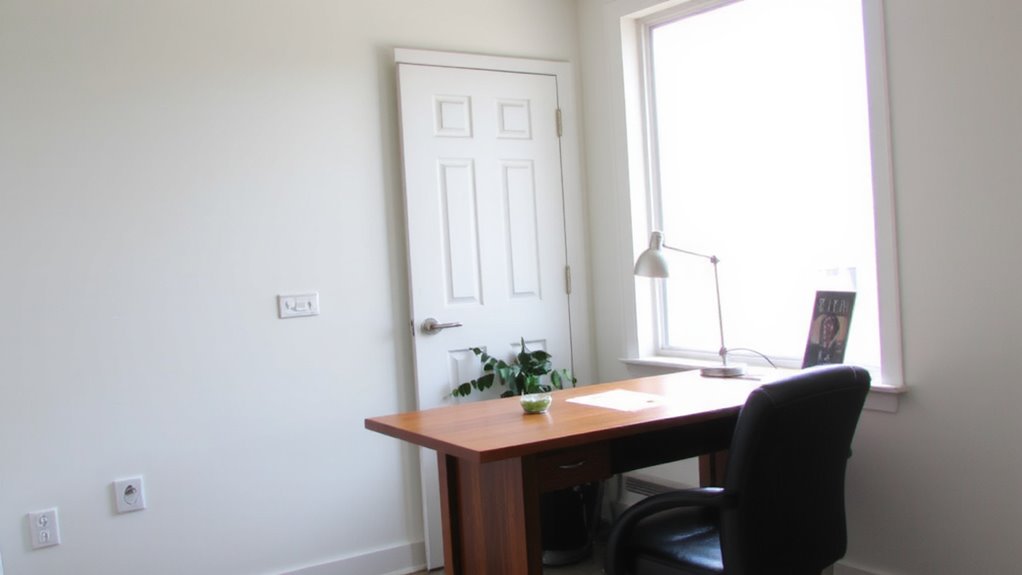
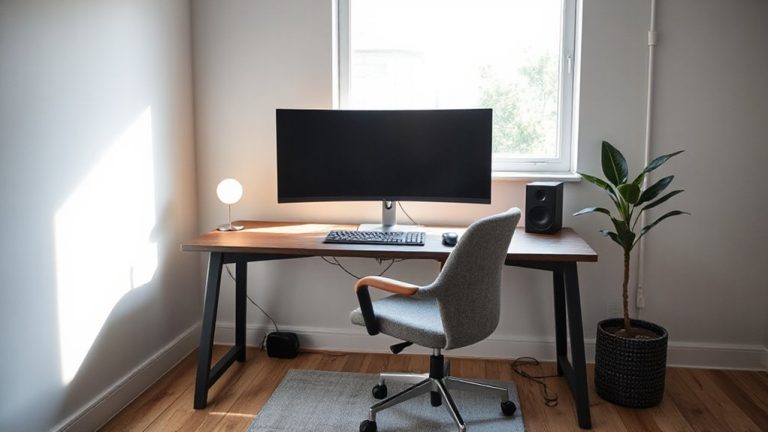
You’ve cleared the clutter, so now it’s time to position your desk and chair for better energy flow-because how you place these two pieces shapes your entire workday. For desk harmony, place your desktop perpendicular to the door, not directly in line with it, so you can see who’s entering without facing distractions head-on. This command position supports focus and reduces subconscious stress. Your chair balance matters just as much-choose one with lumbar support and adjustable height to align your elbows with the desk surface, ideally 26–30 inches high. Avoid placing your back to the door or a wall; some open space behind you adds psychological support. Don’t rely on design trends-test the setup over two workdays. If you feel strained or restless, reposition. Ergonomic function and feng shui principles work best when balanced, not forced. A well-chosen best ergonomic office chairs model can further enhance both comfort and energy alignment in your workspace.
Boost Calm and Creativity With Natural Feng Shui Elements
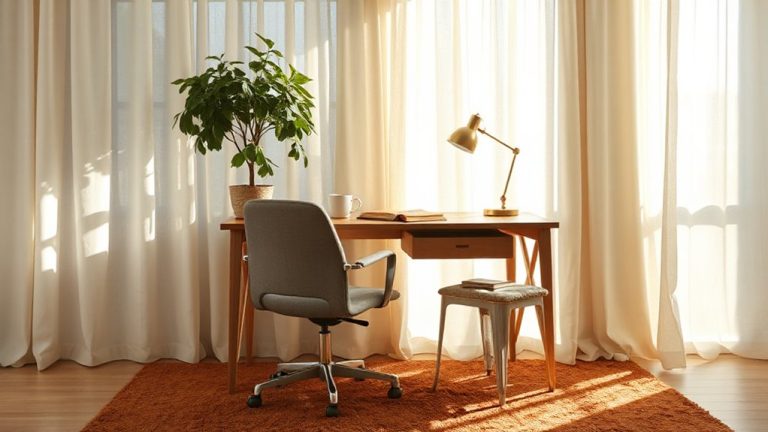
Nature isn’t just a decorative afterthought-it’s a functional tool to shape your home office’s energy. Bringing in indoor plants like snake plants or pothos improves air quality and adds visual calm, helping reduce mental fatigue during long work sessions. They’re low-maintenance and thrive in indirect light, but overwatering is a common pitfall-stick to well-draining pots. Natural light, especially morning sunlight, regulates your circadian rhythm, boosting focus and mood. Position your desk near a window, but avoid direct glare on screens; sheer curtains can help diffuse brightness without dimming the room. While natural light fluctuates, consistent exposure supports long-term well-being. Just make certain plants don’t overcrowd your space-too many can clutter surfaces and disrupt workflow. Balance is key: a couple of well-placed greenery and maximized daylight create a steady, creative atmosphere without compromising practicality or comfort. Top choices for low-light office environments include best office plants that require minimal care while enhancing air quality.
Use Color and Light to Enhance Your Work Energy
What if the right shade on your walls or the quality of your lighting could sharpen focus-or quietly drain it? In your home office, color psychology and light therapy aren’t just trendy ideas-they’re tools. Calming blues and greens support concentration, while warm tones like peach or soft yellow can spark engagement without overstimulating. Avoid harsh reds or overly dark hues that may increase stress. Pair paint choices with full-spectrum lighting (measured at 5000K color temperature) to mimic natural daylight, potentially boosting alertness. Below are practical options:
| Color | Best For |
|---|---|
| Sage | Focus & eye comfort |
| Sky Blue | Calm under deadlines |
| Warm White (LED bulb) | Light therapy benefits, reduced eye strain |
Use dimmable fixtures to adjust intensity. Balance ambiance with task lighting, but don’t overload circuits. Results vary by individual-test adjustments over a workweek.
Align Your Office With Life Goals Using the Bagua Map
How might the layout of your home office influence more than just your productivity? It can shape your focus, energy, and alignment with life goals through the Bagua map-a Feng Shui tool that divides your space into life zones. When you map these zones onto your office, each area corresponds to aspects like career, relationships, or wealth energy. Position your desk in the career zone (north) for ambition, or enhance the southeast wealth corner with a small plant or violet lighting. You don’t need expensive gear-just intention and accurate measurement. Be precise: misaligning zones weakens impact. While results aren’t scientifically proven, many report clearer focus. Avoid clutter in key zones; it blocks flow. This method won’t replace hard work, but paired with good habits, it may support meaningful progress across your life zones.
On a final note
You’ll likely feel more focused and balanced by applying these feng shui principles, especially if you start with clutter clearing and claim the command position. Natural light, a supportive chair, and proper desk alignment can boost daily performance. But don’t expect magic-results depend on consistent use, realistic space limits, and personal work habits. A $200 ergonomic chair helps, but only if you actually use it correctly.