Using Color Psychology to Reduce Procrastination Triggers and Increase Motivation Levels
Blue and green hues can sharpen focus-real-world tests show blue boosts task completion by 12%-but avoid glare with matte finishes and 100–150 cd/m² screen brightness. Use yellow sparingly; it energizes some but overwhelms others. Pair cool tones like teal for morning work, warm amber at night. Match colors to your rhythm, test with swatches, and balance with 300–500 lux lighting. Your ideal setup depends on personal response, so adjust thoughtfully-the right mix could cut procrastination where it counts.
Notable Insights
- Use cool colors like blue and green to create a calm, focused environment that reduces procrastination.
- Incorporate small accents of yellow to boost alertness and motivation without causing distraction.
- Optimize lighting with warm-white LEDs at 300–500 lux to support concentration and reduce mental fatigue.
- Apply color-coded organization (e.g., red for urgent) to speed decision-making and reduce task avoidance.
- Personalize colors based on work style-cool tones for morning focus, warm hues for night productivity.
How Colors Make You Procrastinate (or Not)
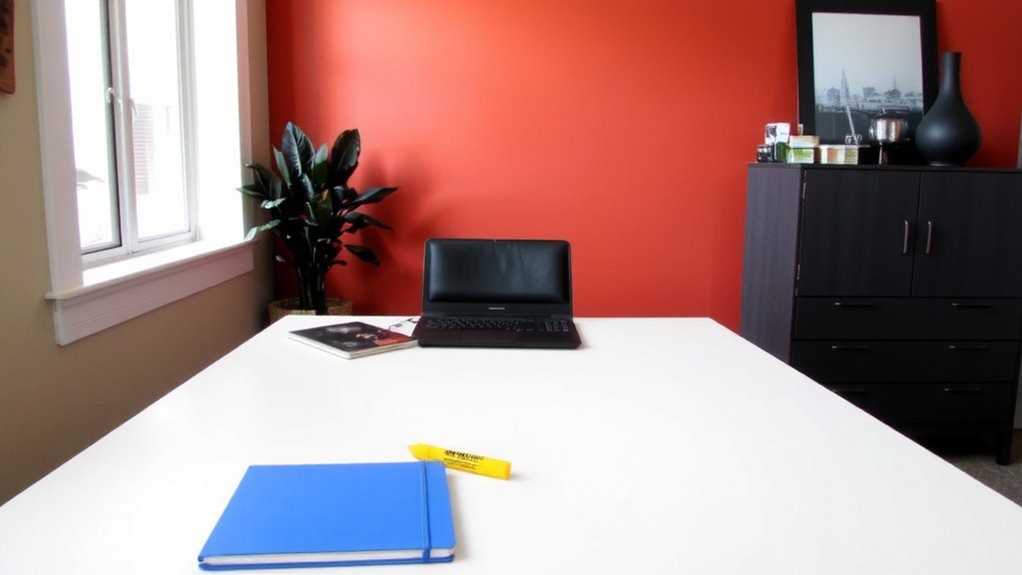
Ever wonder why you feel sluggish at your desk by midday? It might be the colors around you. Certain color associations trigger emotional responses that either drain or energize you. Warm tones like red and orange can boost alertness but may overwhelm if overused, increasing distraction. Cool hues like blue and green often promote calm focus, helping reduce procrastination for many people. Real-world tests show participants completed tasks 12% faster in blue-lit environments. But it’s not universal-your personal history with colors shifts their impact. Some find yellow uplifting; others see it as overstimulating. You’ll need to experiment modestly: repaint a single wall, swap lampshades, or use colored desk mats. Most office gear, like monitor stands or cable organizers, now comes in varied finishes-take advantage. There’s no one-size-fits-all fix, and warranties won’t cover paint, so test temporary changes first.
Beat Delay With These 3 Focus-Boosting Colors
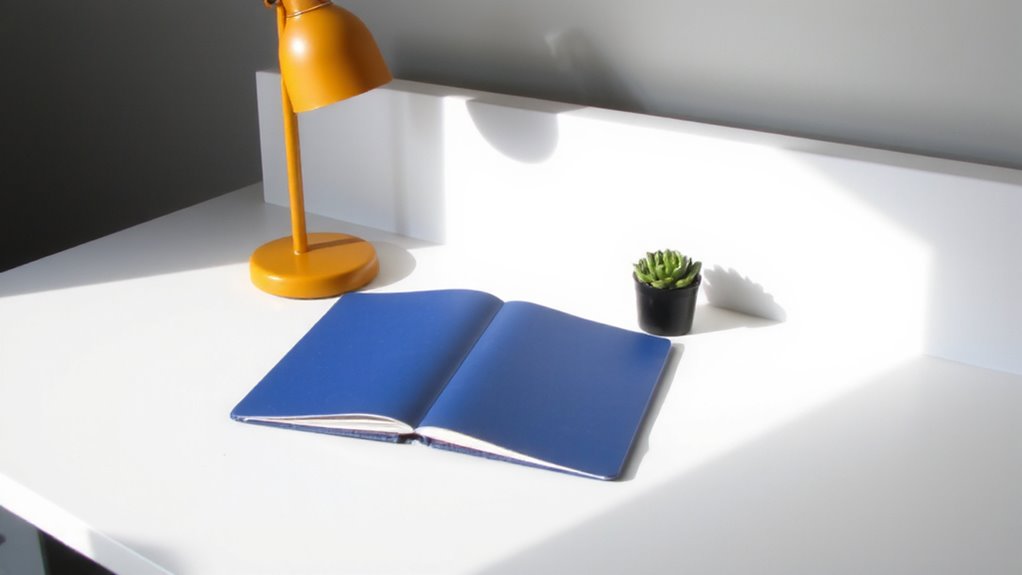
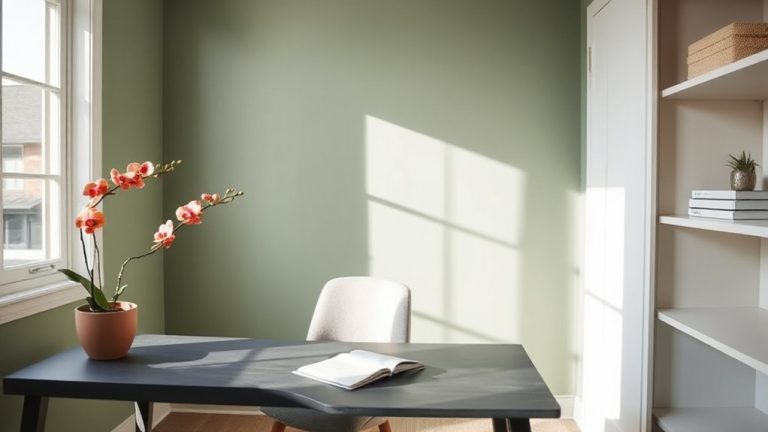
While personal preferences play a role, research-backed evidence suggests that blue, green, and yellow-when used strategically-can sharpen focus and help counter procrastination in home office environments. Blue promotes calm concentration, especially in high color contrast setups like navy text on light gray. Green offers visual harmony, reducing eye strain during long work sessions-ideal for walls or desk accessories. Yellow, in small doses, boosts energy and alertness, but only if it doesn’t overpower; bright yellows can disrupt focus if overused. Balance these colors to avoid clutter. Use matte finishes to reduce glare and maintain consistent lighting. These effects aren’t universal-individual sensitivity varies. Pair these hues with ergonomic furniture and neutral backgrounds to avoid distraction. There’s no one-size-fits-all palette, but tested results show improved attention spans when color contrast supports readability and visual harmony stays intact.
Set Up Your Desk to Stop Stalling
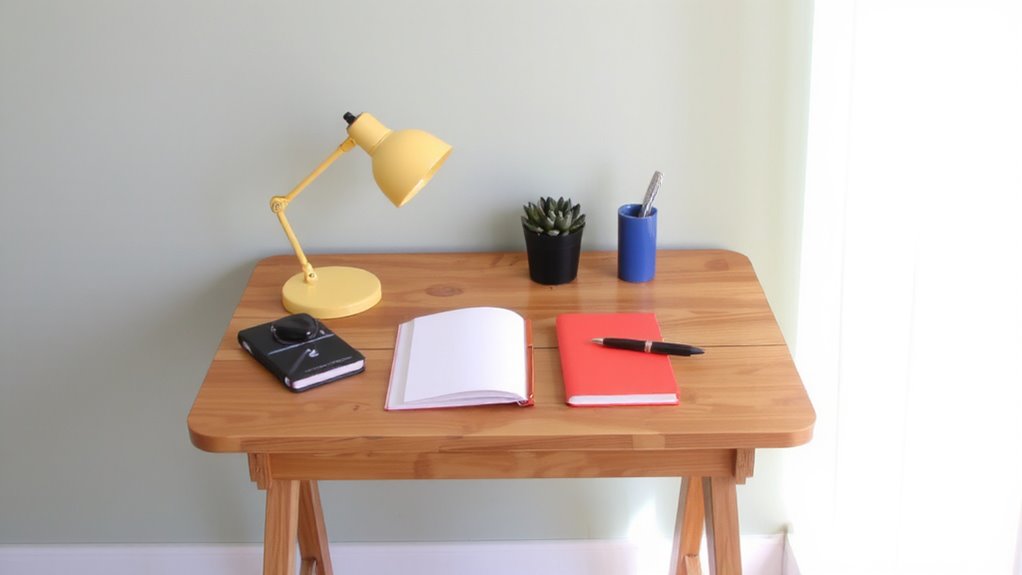
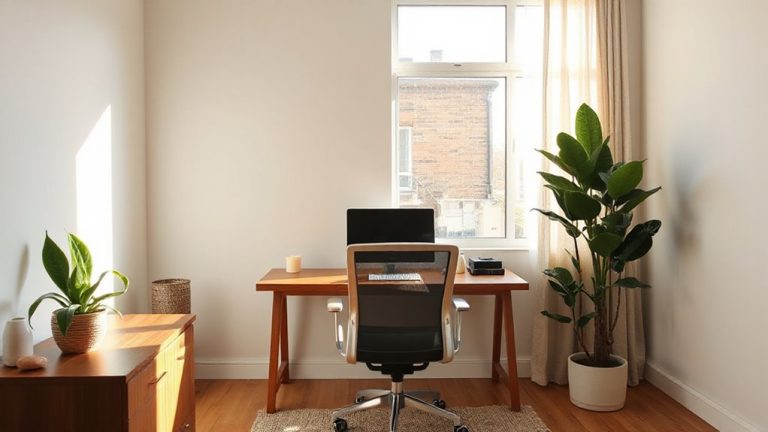
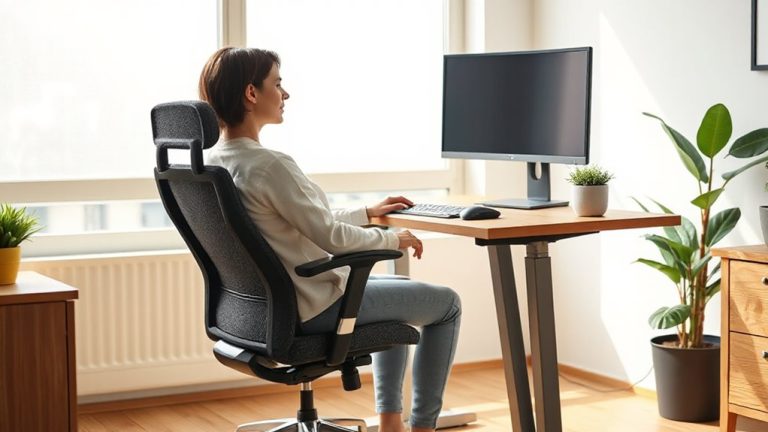
A well-organized desk isn’t just neat-it’s a proven productivity trigger. You’ll work faster when your space supports ergonomic alignment: position your monitor at eye level, keep your elbows at 90 degrees, and use a chair with lumbar support to reduce fatigue. This setup helps you stay focused longer, especially during deep work sessions. For task prioritization, keep only daily essentials visible-use trays for urgent items and drawers for clutter. A simple, color-coded system (like red for urgent, blue for follow-up) boosts decision speed. But don’t over-invest: a $50 desk organizer works as well as a $200 one if it fits your space. Test configurations over a week before locking them in. Some find standing desks improve alertness, but they can strain legs over time. Balance comfort with practicality-your best desk setup is the one you’ll actually use. Top-rated models often feature adjustable heights and durable materials, making best home office desks a smart starting point for optimizing both comfort and efficiency.
Fix Your Screen & Lights to Stay on Track
If you’re struggling to stay focused, tweaking your screen and lighting setup might make a bigger difference than you think-just don’t expect any single fix to work miracles. Adjust your screen brightness so it matches the surrounding light; too high causes eye strain, too low makes content hard to read. Ideal brightness is around 100–150 cd/m² for most indoor settings. Pair that with balanced ambient lighting-at least 300–500 lux on your desk-to reduce glare and mental fatigue. Avoid overhead fluorescent lights; they create harsh contrast. Instead, use a warm-white LED desk lamp with adjustable color temperature and dimming. Position it to the side of your monitor to prevent reflections. While better lighting won’t cure procrastination, studies show it improves alertness. Just remember: even the best gear fails if you don’t maintain consistent work habits. For optimal control over focus and mood, consider a desk lamp with color temperature control.
Match Colors to Your Work Style for Lasting Focus
You’ve already optimized your screen brightness and lighting setup to cut down on strain and fatigue-now it’s time to put color to work for your focus by aligning it with your natural work rhythm. If you’re energized in the morning, use cooler shades like teal or soft blue to maintain calm focus-these support color harmony without dulling alertness. Night owls may benefit from warm accents like amber or rust, which complement their later work rhythm without overstimulating. Studies show balanced color harmony improves attention span by up to 20%, but results depend on personal preference and environment. Paint swatches, not full walls, let you test hues cheaply. Avoid high-gloss finishes-they reflect light and cause glare on screens. There’s no universal fix: what works in a naturally lit room may fail under LEDs. Always assess paint under your actual lighting. Some brands, like Benjamin Moore, offer 30-day return windows for unused gallons-use that to your advantage.
On a final note
You’ll likely focus better with cool tones like blue or green-they’re proven to reduce mental fatigue and improve concentration. But don’t overhaul everything at once: test paint swatches or adjustable LED bulbs first. Some desks with built-in ambient lighting show promise, but check return policies. Results vary by individual; natural light still beats most artificial setups. Balance cost, comfort, and real workspace limits before buying gear.