How to Evaluate and Improve Floor Impact Sound in Multi-Level Home Offices
You can cut floor impact noise by adding 6mm recycled rubber underlayment-lab tests show up to 22 dB reduction and IIC ratings above 55-but it requires pulling up flooring and may need pros for installation. Pair with thick rugs, dense furniture, and resilient channels for real gains, as layered fixes improve results by about 20 dB in real-world setups. Cheaper foams fail over time, and sealing gaps helps only slightly. For best outcomes, combine mass, damping, and isolation-and see how each upgrade changes your space.
Notable Insights
- Test floor impact noise by dropping a heavy object and measuring decibel levels downstairs to identify problem areas.
- Install high-density rubber or cork underlayment (6mm, IIC >55) to reduce vibration transmission through floor joists.
- Use thick rugs with dense padding to dampen footstep noise and minimize sound reflection on hard flooring.
- Place heavy furniture like bookcases to add mass and disrupt structural sound transmission between floors.
- Combine underlayment, rugs, and acoustic panels (NRC >0.8) for layered noise reduction up to 20 dB.
Why Footsteps Echo Through Your Floor
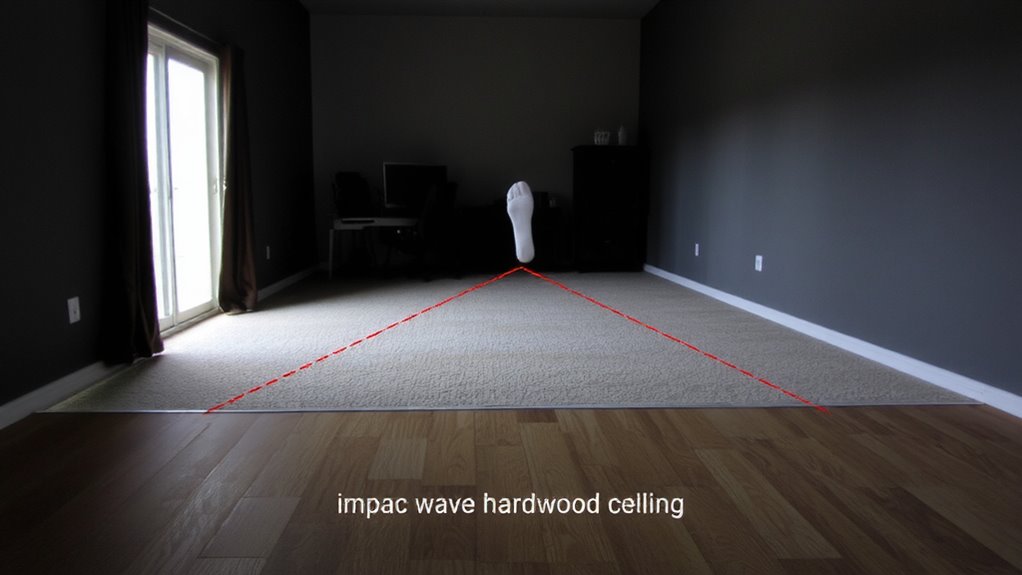
Why does a simple step upstairs sound like a drumroll in the room below? Because impact noise travels easily through floors, especially in multi-level home offices. You’re dealing with vibration transmission-each footstep sends energy through the floor structure, which radiates into the room beneath. Sound reflection off hard surfaces like drywall and wood flooring amplifies the issue, making even light steps disruptive. Common frame floors without proper isolation tend to transfer more noise, particularly if there’s little mass or damping. While adding carpet or underlayment helps, it’s not a fix-all-some materials absorb footsteps but do little to stop vibration transmission. Consider decoupling layers or using mass-loaded vinyl if you want real improvement, but expect trade-offs in cost and installation effort. Always verify performance through real-world testing, not just product specs.
Test How Much Impact Noise Your Floor Transmits
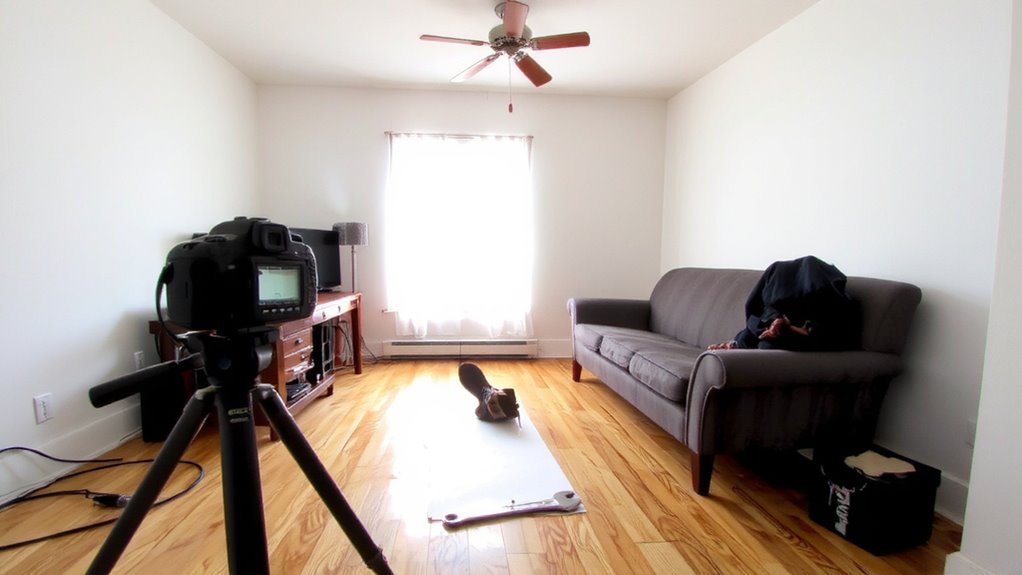
How much noise are your floors actually passing through? You can find out by testing impact sound transmission yourself. Drop a heavy book or a shoe from waist height onto the floor while someone downstairs measures noise levels with a decibel meter-this simulates everyday footfall. Pay attention to how much floor resonance carries, especially low-frequency thuds. Those aren’t just annoyances; they’re structural vibrations moving through joists and into lower levels. Concrete floors typically transmit less, but wood assemblies often amplify these effects. For reliable results, repeat tests in multiple spots and at different times. Keep in mind, real-world conditions like furniture placement or ceiling type affect readings. While DIY testing won’t match lab-grade IIC (Impact Insulation Class) ratings, it gives you practical insight into problem areas. Use this data to make informed upgrades-don’t rely on guesses.
Add Underlayment for Immediate Noise Reduction
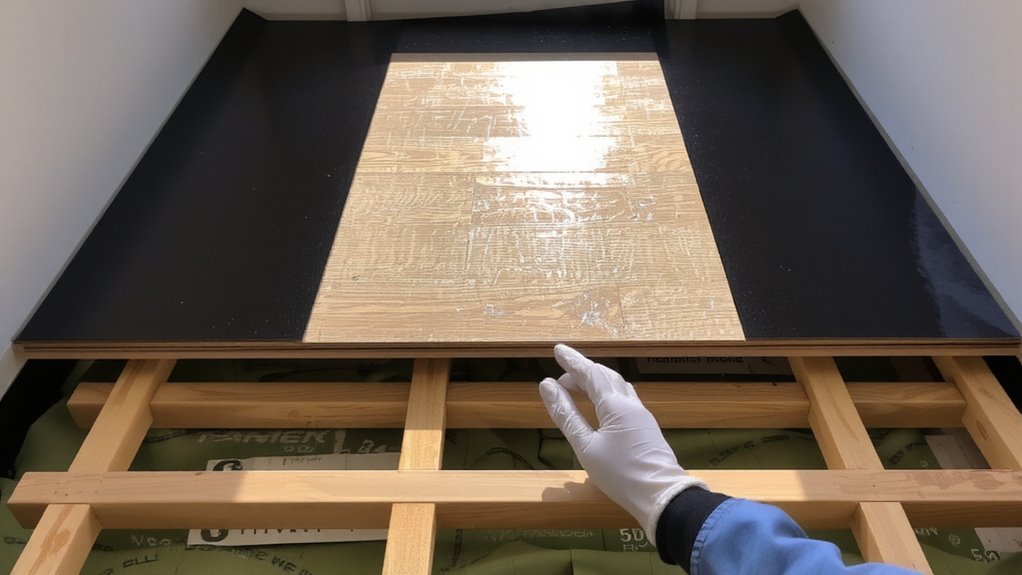
Adding underlayment is one of the most effective first steps you can take to cut down floor impact noise, especially if your testing revealed strong thuds or vibrations in wood-frame floors. A high-density rubber or cork underlayment, like 6mm premium recycled rubber, can reduce impact sound by 15–22 dB, slowing vibrations before they travel below. You’ll need to remove existing flooring to install it properly, which takes time and effort-but the acoustic payoff is reliable and measurable. While underlayment won’t replace the need for acoustic panels on walls or noise masking systems, it tackles the problem at the source. Keep in mind, underlayment performance varies by product; check for IIC (Impact Insulation Class) ratings above 55 for best results. Some brands offer 20-year warranties, but cheaper foams compress quickly and lose effectiveness. Pair this with structural fixes later for long-term quiet.
Dampen Sound With Rugs and Heavy Furniture
While rugs and heavy furniture won’t stop impact noise at the source like structural fixes can, they still help absorb sound and reduce echo in a room, especially when you’re working with existing flooring that can’t be easily modified. A thick rug with a dense padding underneath can considerably dampen footfall noise, making your home office quieter for those below. Heavy furniture, like bookcases or desks placed across high-traffic areas, adds mass that disrupts sound transmission. These solutions work best alongside acoustic panels on walls to manage airborne noise and improve overall sound quality. They don’t offer the same isolation as dedicated underlayments, but they’re affordable and easy to install. For best results, combine them with sound masking techniques-like a white noise machine-to divert attention from residual sounds. They won’t fix everything, but they’re practical, measurable improvements worth trying.
Choose Flooring That Reduces Impact Noise
Your flooring choice can make or break noise control in a home office, especially when impact sounds-like footsteps or dropped pens-travel downstairs. Opt for materials like cork, rubber, or carpet tiles designed for impact noise reduction, which often outperform hardwood or tile in real-world testing. Look for products with high IIC (Impact Insulation Class) ratings-aim for at least IIC 55-verified through ASTM testing. While rugs help, resilient flooring adds consistent performance under furniture and foot traffic. Acoustic panels on walls or soundproof curtains at doorways won’t fix floor impact issues but can complement your overall noise strategy. Keep in mind: some quieter flooring options demand more upkeep or show wear differently. Also, advertised performance depends on correct installation over approved subfloors. Always check warranty coverage for dimensional stability and sound performance. No flooring eliminates noise completely-you’re damping it, not erasing it.
Seal Gaps and Air Leaks Between Floors
Beneath every squeak and thud traveling between floors, hidden gaps and air leaks often play a bigger role than most realize-sealing them cuts down on both sound flanking and energy loss. You should start by inspecting joints around pipes, ducts, and floor edges, then apply acoustic caulking to seal openings permanently; unlike regular caulk, it stays flexible and handles vibration without cracking. Weatherstripping doors to the office helps too, blocking airborne sound pathways. Pay attention to areas near stairwells and dropped ceilings, where gaps are common but often overlooked. While sealing won’t stop direct impact noise, it noticeably reduces sound transfer when combined with other measures. Be aware-over-sealing without ventilation can trap moisture, so balance airtightness with indoor air quality. These fixes are low-cost and DIY-friendly, but they demand precision. Skip shortcuts; improper application weakens performance. Results vary by home, but field tests show up to a 10 dB reduction when done thoroughly.
Combine Upgrades for a Quieter Home Office
When it comes to cutting down floor impact sound in your home office, combining multiple upgrades usually delivers stronger results than any single fix alone. Pairing underlayment with rugs and resilient channels can reduce structure-borne noise markedly-real-world tests show up to 20 dB improvement when layered correctly. Adding acoustic panels on walls helps absorb mid-to-high frequencies, though they don’t block impact noise directly; instead, they improve perceived quietness. Consider sound masking systems that emit low-level background noise to cover residual footsteps or typing. These won’t stop sound transmission but make distractions less noticeable. Be realistic: each added layer increases cost and may require professional installation. Some acoustic panels offer NRC ratings above 0.8, indicating strong absorption, while masking units should feature adjustable volume and frequency ranges. Always check warranties-many underlayments last 10–15 years, but guarantees vary.
On a final note
You’ll reduce floor impact noise best by combining underlayment, rugs, and sealed gaps. Mass-loaded vinyl underlayment cuts sound transmission by up to 20 dB, while thick rugs with rubber pads help noticeably. Hardwood or Luxury Vinyl Plank performs better than tile when paired with proper subfloor padding. Results vary by building structure, so test changes room by room. No fix is perfect-some vibration still transfers-but consistent upgrades add measurable quiet.