Positioning Your Desk to Minimize Noise Reflection From Hard Floor Surfaces
Place your desk at a 45-degree angle to walls and pair it with a 1/2-inch thick low-pile rug underneath to cut noise reflection from hard floors-this combo disrupts echo and absorbs sound better than either fix alone. Add a padded desk mat and position the desk 6–12 inches from walls to further reduce bounce. Watch for tighter space and test chair roll, especially with casters. You’ll find more ways to fine-tune your setup just ahead.
Notable Insights
- Angle your desk at 45 degrees to scatter sound waves and reduce direct reflections from hard floors.
- Place a thick, low-pile rug under the desk to absorb sound and minimize echo on hard flooring.
- Position the desk away from walls and corners to avoid sound buildup and reduce noise reflection.
- Use a tall bookshelf behind or beside the desk to block and diffuse sound waves effectively.
- Combine desk angling with acoustic panels on nearby walls for optimal noise control.
Angle Your Desk to Cut Down Echo
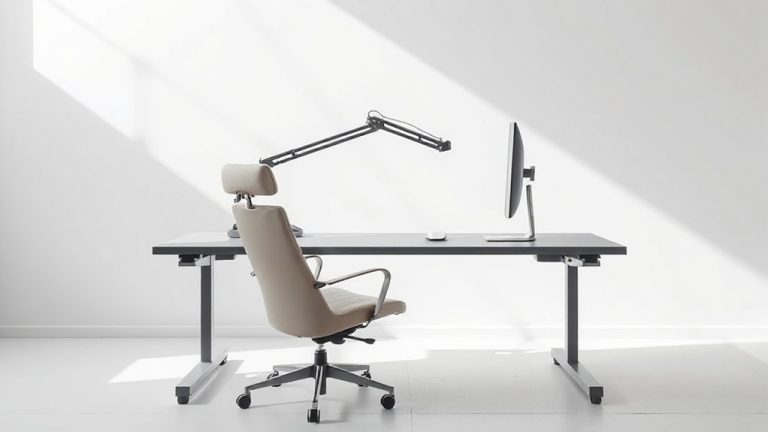
While angling your desk might seem like a small adjustment, it can make a noticeable difference in reducing echo, especially in rooms with hard floors and bare walls. Positioning your desk at a 45-degree angle to flat surfaces helps scatter sound waves, minimizing direct reflections that cause muddled audio during calls. You’re not eliminating noise entirely, but you’re disrupting its path-especially when combined with acoustic panels behind and beside your seating area. Sound diffusers work best on walls, breaking up mid-to-high frequencies, though they won’t stop low-end reverberation. Panels made from foam or fiberglass absorb more, but placement matters: center them at ear level for maximum effect. Keep in mind, angling your desk might limit floor space or disrupt ergonomic alignment. It’s a simple, cost-free tweak that helps, but it’s most effective alongside other treatments-not a standalone fix. For targeted solutions, consider the best acoustic panels for home office environments to optimize sound absorption.
Add a Thick Rug Under Your Desk
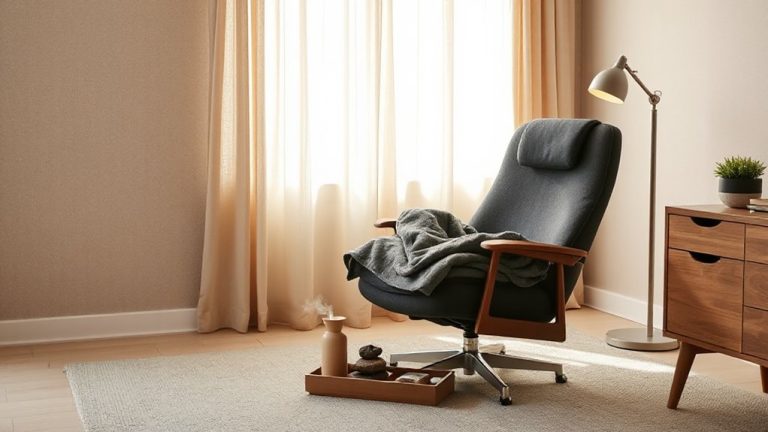
A thick rug under your desk does more than warm up your workspace-it tackles noise at the source. By absorbing sound rather than reflecting it, a dense rug reduces echo and softens footfall. Choose one with high material thickness-ideally 1/2 inch or more-since thicker padding traps sound waves more effectively. Rug texture matters too; looped or shag weaves absorb better than flatweaves, though they can snag chair casters. Go for low-pile for easy rolling, especially if you use an office chair with hard wheels. Natural fibers like wool offer good sound dampening and durability, while synthetic blends often cost less and resist stains. Make sure it’s large enough to cover your entire desk zone, including rolling areas. Check for non-slip backing-safety matters. Some quality rugs come with 5-year warranties, a sign of lasting construction. Still, avoid overspending if you plan to rearrange frequently-effectiveness drops if the rug shifts constantly.
Use Furniture to Block and Absorb Sound
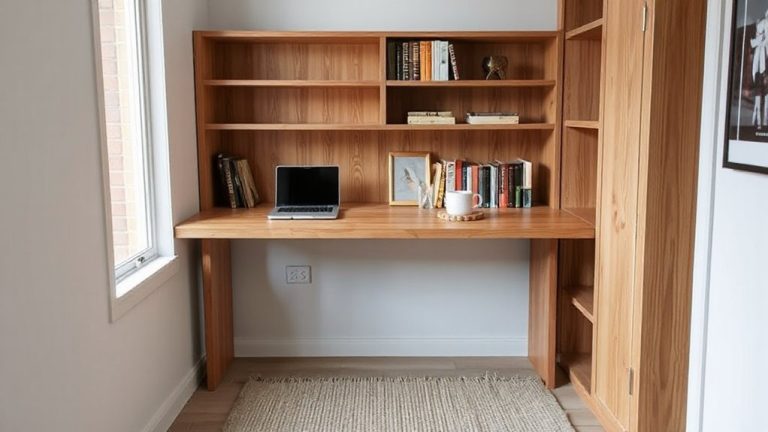
Strategically placing furniture can make a real difference in cutting down desk-level noise, especially when you use pieces that block sound paths or absorb echoes. A tall bookshelf placed behind or beside your desk acts as a bookshelf barrier, disrupting direct sound waves from speakers or background chatter. Fill it with books, fabric items, and odd-shaped decor-uneven surfaces scatter sound better. For smoother results, pair it with acoustic panels mounted on nearby walls; these lightweight panels use open-cell foam or fabric-wrapped mineral fiber to absorb mid-to-high frequencies. They’re most effective when placed at reflection points, like the wall opposite your desk. While panels improve clarity in voice calls, they won’t block low-frequency noise like traffic. Both solutions require space and may limit room layout flexibility. Choose models with fire-resistant ratings and at least a 1-year warranty for durability.
Place Your Keyboard to Muffle Typing Noise
Your keyboard’s placement plays a key role in reducing typing noise, especially if you work near others or on voice calls. Proper keyboard placement can enhance noise damping by minimizing sound reflection off hard surfaces. Position your keyboard closer to you, on a padded surface like a woven wrist rest or a desk mat made of dense fabric, which absorbs impact better than plastic or metal. Avoid floating your hands above the keys-let your wrists rest lightly to reduce keybed collision noise. Mechanical keyboards, while responsive, tend to be louder; if you use one, opt for models with rubber dampeners or switch types labeled “tactile quiet.” Note that noise damping solutions vary-some mats claim sound reduction but offer minimal improvement in real-world use. Always test placement adjustments in your actual workspace, since desk material and room acoustics affect results. Small changes often help more than buying new gear.
Desk Position: Avoid Walls and Corners
Don’t park your desk against a wall or squeeze it into a corner unless you’ve tested how sound behaves in that spot-hard, flat surfaces reflect noise back into the room, amplifying typing clatter and making echo worse on calls. Smart desk placement reduces sound bounce by breaking direct reflection paths. Position your desk toward the room’s center or at an angle to disrupt sound waves. Corner avoidance isn’t just about space-it’s critical for minimizing acoustic buildup, especially in rooms with hardwood or tile flooring. Floating your desk away from walls by even 6–12 inches can noticeably soften noise. Just make sure power access and cable reach aren’t compromised. While wall alignment might save floor space, the trade-off is louder, less clear audio during video meetings. Balanced setup matters: open positioning improves acoustics, but always confirm it works with your room layout.
Test and Adjust for the Quietest Setup
How do you know your desk placement is actually reducing noise? Test it. Sit at your desk and have someone speak or play audio from typical noise sources while you listen for changes in clarity and volume. Adjust your desk a few inches at a time, noting how the room layout affects sound reflections. Hard floors bounce noise, so position your desk where furniture or bookshelves act as natural sound barriers. If needed, add a thick rug or acoustic panels at reflection points. Re-test after each change-small shifts often make a big difference. Don’t assume corner placement works best; it can amplify noise. Be mindful that adding barriers may limit space or alter lighting. Results vary by room shape and materials, so prioritize real-world listening over theory. Your quietest setup is the one that *sounds* quietest-trust your ears.
On a final note
You’ll reduce echo markedly by angling your desk away from walls and pairing a thick, low-pile rug (at least 6′ x 9′) with upholstered furniture nearby. These steps dampen sound effectively, especially on hardwood or tile. Just remember: tight spaces limit positioning options, and rugs need non-slip pads to stay safe and flat. Results vary by room shape and ceiling height, so test with voice recordings before finalizing.