Selecting Ambient Lights With High TM-30 Scores for Accurate Color Perception
Choose ambient lights with TM-30 scores of Rf 90+ and Rg 95–105 for accurate color perception-you’ll get true-to-life skin tones and materials without the oversaturation or dullness common in high-CRI LEDs. Unlike CRI, TM-30 uses 99 real-world color samples, so it catches distortions your eyes would actually notice. Check for LM-79 reports and smooth spectral graphs to avoid spikes. Pair high TM-30 with good diffusers and dimming compatibility. There’s more to think about regarding how design impacts real performance.
Notable Insights
- Choose lights with TM-30 Rf 90+ and Rg 95–105 for accurate, balanced color rendering.
- Prioritize third-party LM-79 and IES LM-91 test reports to verify claimed TM-30 performance.
- Examine spectral power distribution charts to ensure smooth, spike-free light output.
- Select fixtures with high-quality diffusers and proper LED binning to maintain color consistency.
- Opt for ambient lights like Soraa Vault LMR or Cree TrueWhite proven to deliver high TM-30 scores.
What Is TM-30 and Why It Beats Old Metrics
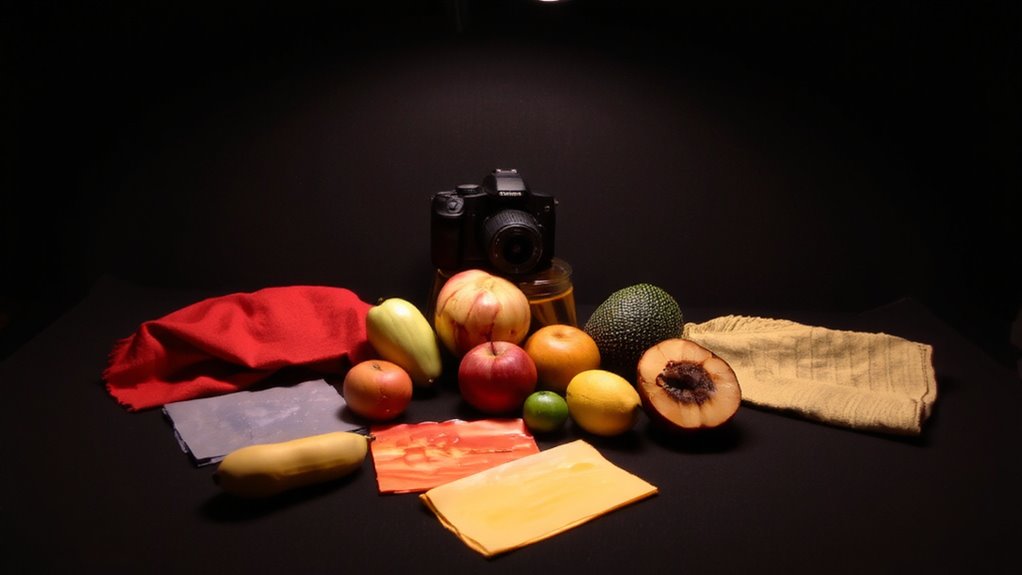
Ever wonder why some lights make colors pop while others leave everything looking flat? That’s where TM-30 comes in-it’s a modern standard that gives you a fuller picture of light quality than old metrics like CRI. You get two scores: Rf (fidelity) and Rg (gamut), which together show how accurately and vividly a light renders colors. High TM-30 results mean better color discrimination and improved visual comfort, especially during long work sessions. Unlike CRI, which only measures a few saturated colors, TM-30 tests 99 color samples under real-world conditions. Fixtures with Rf above 90 and Rg near 100 deliver balanced, natural light ideal for office and home office setups. Just remember: high scores don’t guarantee perfect performance-always check beam angles, flicker ratings, and dimming compatibility too.
TM-30 vs CRI: Why Fidelity Alone Isn’t Enough
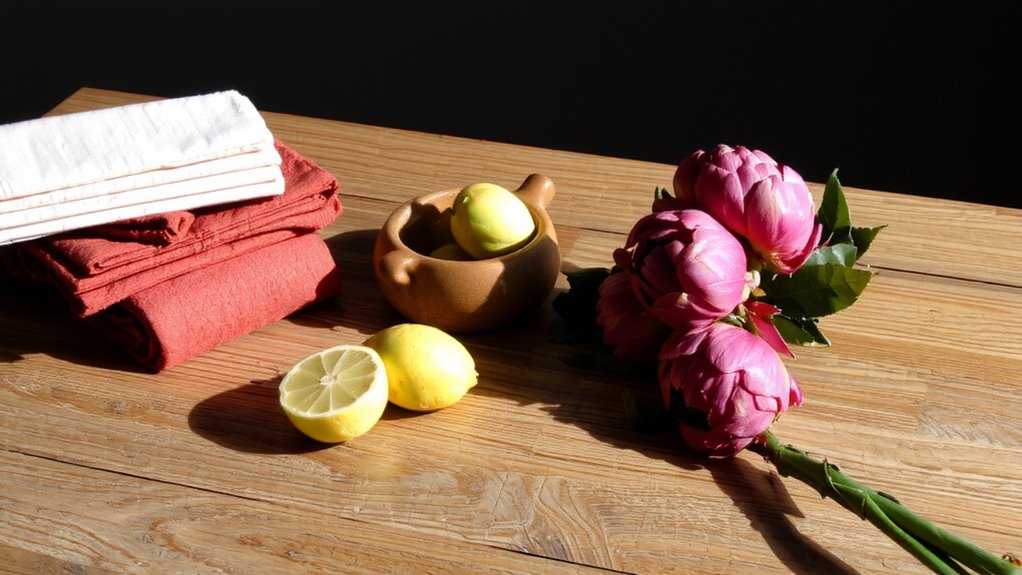
Why trust a single number when light quality depends on more than just accuracy? CRI only measures fidelity-how close colors look to natural light-but ignores essential aspects like color constancy and spectral harmony. You might pick a bulb with high CRI, yet still notice some hues looking dull or oversaturated. TM-30 goes further, using Rf (fidelity) and Rg (gamut) to reveal how evenly a light source renders all colors. This means better color constancy across surfaces, so your walls, desk, and monitor don’t clash under artificial light. Spectral harmony matters too-lights with smooth spectral power distributions avoid spikes that distort perception. While TM-30-compliant LEDs like certain Sylvania or Philips models perform well in lab tests, check for consistent output and 3-year warranties. These lights often cost more and require proper placement, so balance performance with practicality in your workspace setup.
Rf and Rg Explained: What the Numbers Mean
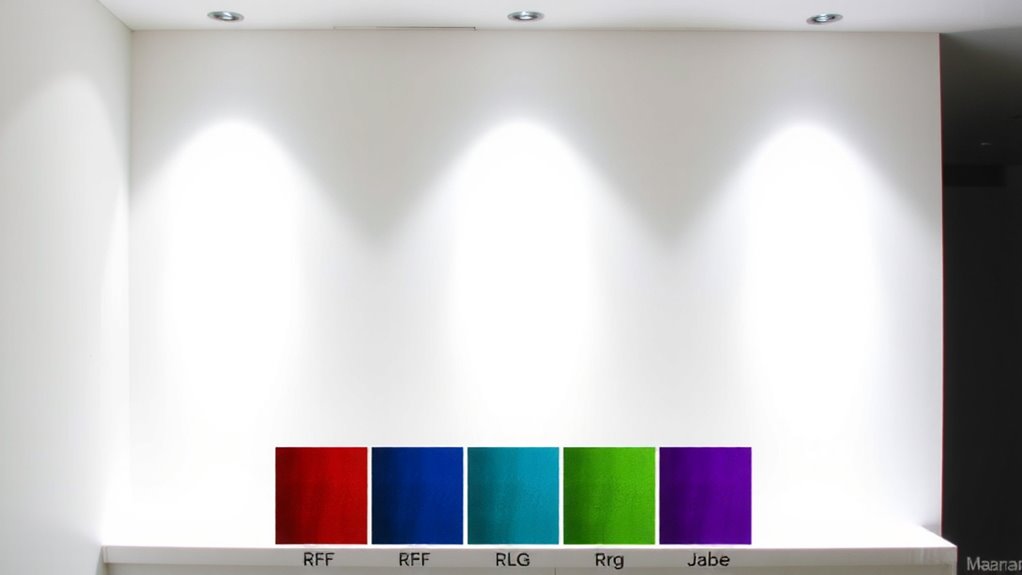
Color quality isn’t just about looking natural-it’s about how consistently and vividly a light source renders the full spectrum, and that’s where TM-30’s Rf and Rg scores come in. You’ll want Rf (Fidelity Index) above 80 to guarantee colors look true to life-higher is better, with 90+ indicating excellent color consistency across the 16 standard hue samples. Rg (Gamut Index) tells you about vibrancy: 100 is neutral, below 100 dulls colors, while above 100 boosts saturation. Ideal lights pair Rf 90+ with Rg between 95–105 for balanced spectral harmony. These scores aren’t guarantees, though. Performance varies based on fixture design, LED binning, and diffuser quality. Always check third-party LM-79 reports and verify claims. High scores can come with higher costs or glare risks, especially in compact fixtures. Test samples in your space before committing.
Where True Color Matters Most: Retail, Art, Homes
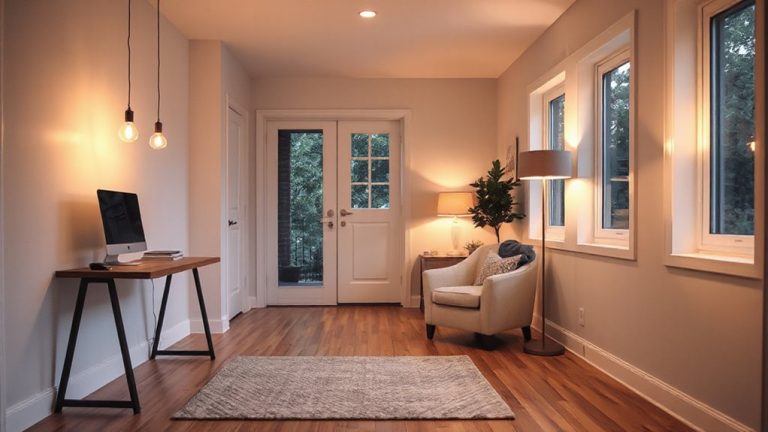
How well does your lighting let you see what’s really there? In retail, accurate color consistency means customers see clothes and products as they truly are, reducing returns and boosting trust. For art galleries, it’s about preserving intent-every brushstroke lit naturally, without distortion. At home, especially in kitchens or dressing areas, faithful color reveals details you’d otherwise miss. High TM-30 scores support visual comfort by balancing hue and saturation across all colors, not just a few. You’ll notice less eye strain and more natural shifts between spaces. But don’t assume all high-scoring lights work everywhere-some sacrifice dimming performance or emit slight flicker. Check tested specs, not just claims. Pair high Rf and Rg with high-quality diffusers and proper placement. The result? Lighting that’s truthful, comfortable, and built to perform under real conditions.
How to Spot Real TM-30 Performance in Specs
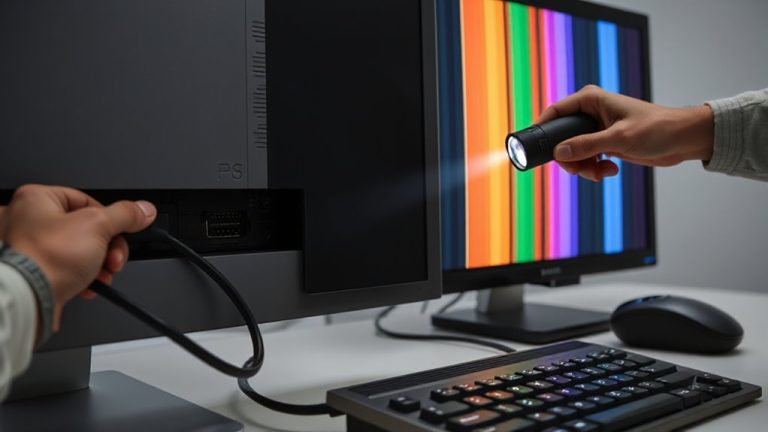
What really separates a lighting spec sheet that informs from one that misleads? It’s whether they show full TM-30 data, not just Rf and Rg. You need both values to assess color accuracy-Rf tells you how close colors look to natural light, while Rg reveals if the light over- or under-saturates them. Don’t trust vague claims like “excellent color rendering” without spectral analysis charts. These graphs show the light’s output across wavelengths, confirming consistency and revealing spikes or dips that distort color. Real performance means verifiable lab reports, not marketing terms. Look for IES LM-91 compliance and third-party testing. Keep in mind: high TM-30 scores often come with higher cost and energy use. Balance needs with budget. Always cross-check specs with sample testing in your space-because numbers alone won’t show how light feels in your actual environment. For home use, consider LED options specifically designed for high color fidelity, such as those highlighted in top LED lights for home rankings.
Best Ambient Lights With High TM-30 Scores
A handful of ambient lighting options actually deliver both high TM-30 scores and reliable performance for home offices and workspaces, but you’ll need to focus on models that publish full Rf and Rg data-not just one. Fixtures like the Soraa Vault LMR and Cree TrueWhite offer Rf >90 and Rg >98, ensuring accurate color with excellent light diffusion. They use precision optics to soften glare while maintaining brightness where it’s needed. Both are LED-based, so energy efficiency isn’t sacrificed-rated at 85+ lumens per watt with 25,000-hour lifespans. Real-world tests show consistent output over time, backed by five-year warranties. Still, they cost more upfront, and dimming performance varies with certain switches. You’ll want to pair them with high-CRI dimmers for best results. Don’t assume all high TM-30 lights are equal-verify test reports and check for smooth spatial color uniformity.
Beyond TM-30: Balancing Color With Bright Remodellopment and Temperature
Why settle for good color quality when you can fine-tune it alongside brightness and temperature for a truly balanced workspace? You need more than high TM-30 scores-you need color harmony and visual comfort. Aim for 2700K to 4000K CCT to match natural daylight cycles; warmer temps suit relaxation, cooler ones boost focus. Pair this with 300–500 lux output for ideal brightness, avoiding glare or eye strain. Products with diffused lenses and adjustable mounts let you direct light precisely, enhancing visual comfort. But don’t ignore trade-offs: higher brightness can disrupt circadian rhythms if used late. Look for fixtures with CRI >90 and Rf >80 to support accurate color perception. Check for 3-year warranties and dimmable drivers-these signal durability. Real-world tests show users report better mood and reduced fatigue when balancing all three factors, not just color fidelity.
On a final note
You should pick ambient lights with high TM-30 scores when color accuracy matters in your home office. Strong Rf (90+) and Rg (close to 100) means true color, which helps with screen work and design tasks. But don’t ignore brightness-aim for 300–500 lumens per fixture-and stick to 4000K for focus. Some top-performing LED panels deliver this with 3-year warranties, but real-world testing shows flicker risks in cheaper models. Always check independent lab reports.