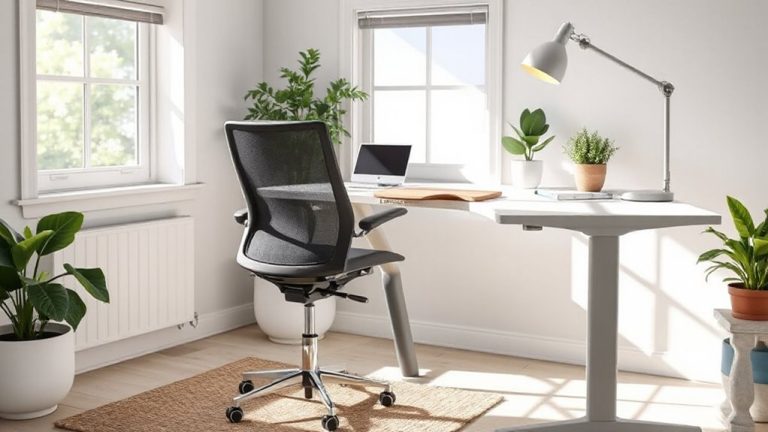
Incorporating Biophilic Design Elements to Enhance Mood and Productivity at Work
You’ll boost mood and focus by adding biophilic elements like natural light within 20–25 feet of windows, paired with motorized shades to cut glare. Use snake or ZZ plants in pots with drainage to avoid overwatering. Choose FSC-certified wood or sealed stone for texture without maintenance hassles. Water features help, but keep them clean and away from desks. Nature soundscapes with directional speakers can mask noise, but test placement first. There’s more to optimizing each choice effectively based on your space’s layout and light quality.
Notable Insights
- Integrate low-maintenance plants like snake or ZZ plants to improve air quality and reduce stress in office spaces.
- Maximize natural light by positioning desks within 20–25 feet of windows and using light-diffusing films to reduce glare.
- Use wood finishes on desks or walls to lower stress and enhance visual comfort in work environments.
- Install water features or nature soundscapes with adjustable audio to mask noise and support focus.
- Incorporate realistic nature imagery or digital displays where live elements aren’t feasible for modest cognitive benefits.
Why Biophilic Design Improves Workplace Well-Being
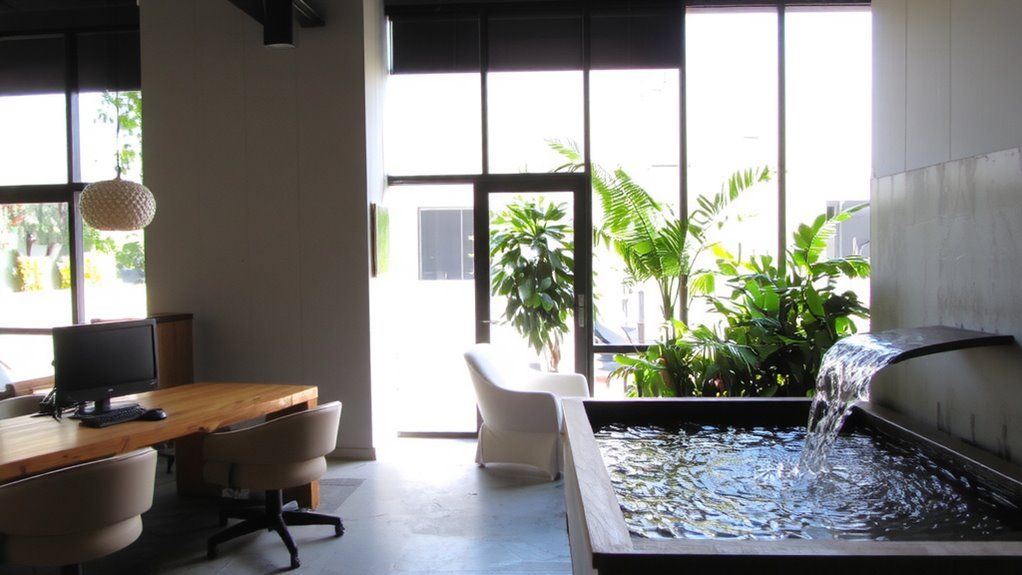
While you might not think a few houseplants or a window view can make much difference, biophilic design actually delivers measurable improvements in workplace well-being-especially when thoughtfully applied. You’ll see stronger employee engagement and better cognitive performance when natural elements are integrated with purpose. Studies show workers in green-rich environments score up to 15% higher on memory and focus tests. Indoor plants, especially medium-sized potted varieties like snake or peace lilies, help filter air and reduce stress-but they require consistent watering and light. Realistic simulations, like nature photography or digital displays, offer a low-maintenance alternative, though effects on focus are modest. You should balance aesthetics with practicality: overloading a space with live plants can create upkeep issues. Biophilic design works best when it enhances, not distracts. It’s not a magic fix, but paired with proper ergonomics and workspace control, it supports measurable mental and performance gains.
Maximize Natural Light With Biophilic Design
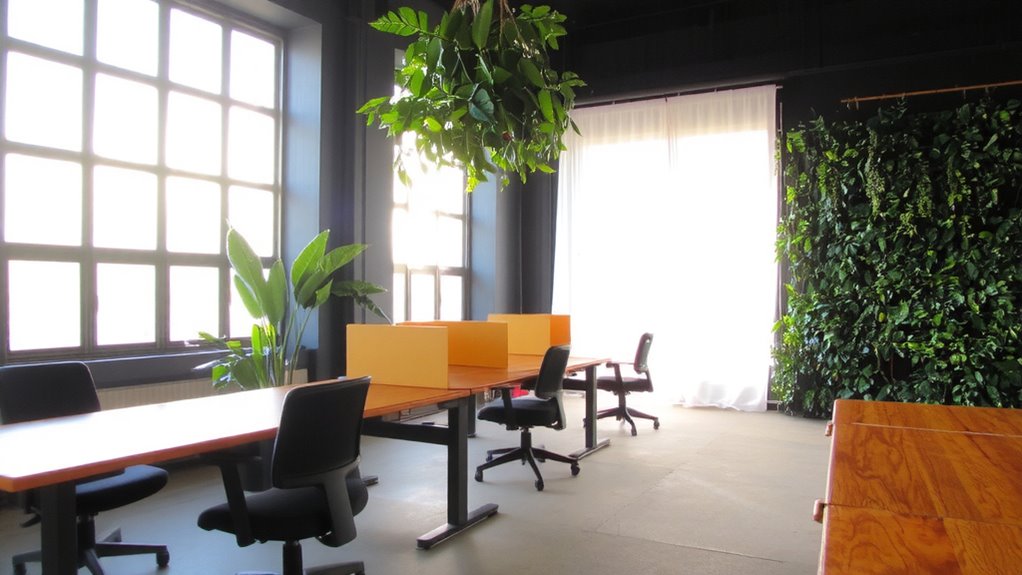
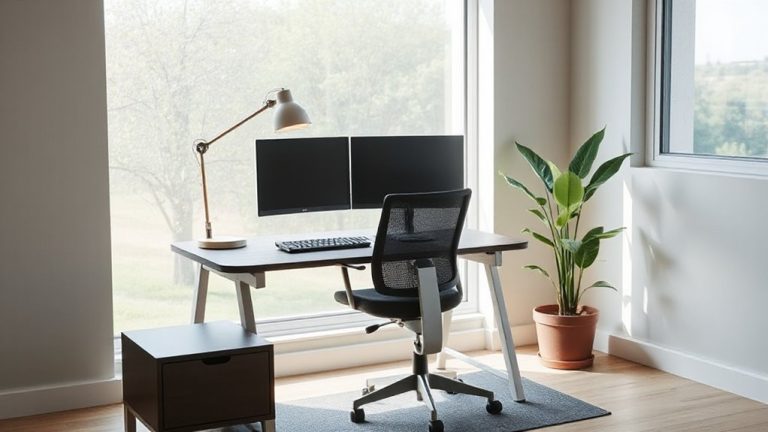
Natural light is one of the most powerful tools in biophilic design, and you can maximize its impact with a few strategic choices. Use shade optimization to balance glare control and daylight access-motorized shades with programmable timers adjust automatically based on sun angle, reducing solar heat gain without blocking views. Pair them with light-diffusing window films or translucent panels to scatter sunlight evenly, minimizing harsh contrasts while boosting ambient brightness. Studies show effective light diffusion can improve circadian alignment, helping regulate alertness and focus. Position desks within 20–25 feet of windows to capture maximum daylight, but avoid direct line-of-sight to glare-prone areas. While these upgrades support well-being, over-reliance on automated systems increases maintenance needs. Not all spaces allow structural modifications, so consider retrofit solutions with proven performance metrics-look for products with at least a 5-year warranty and third-party daylighting certifications to guarantee real-world effectiveness.
Incorporate Low-Maintenance Indoor Plants
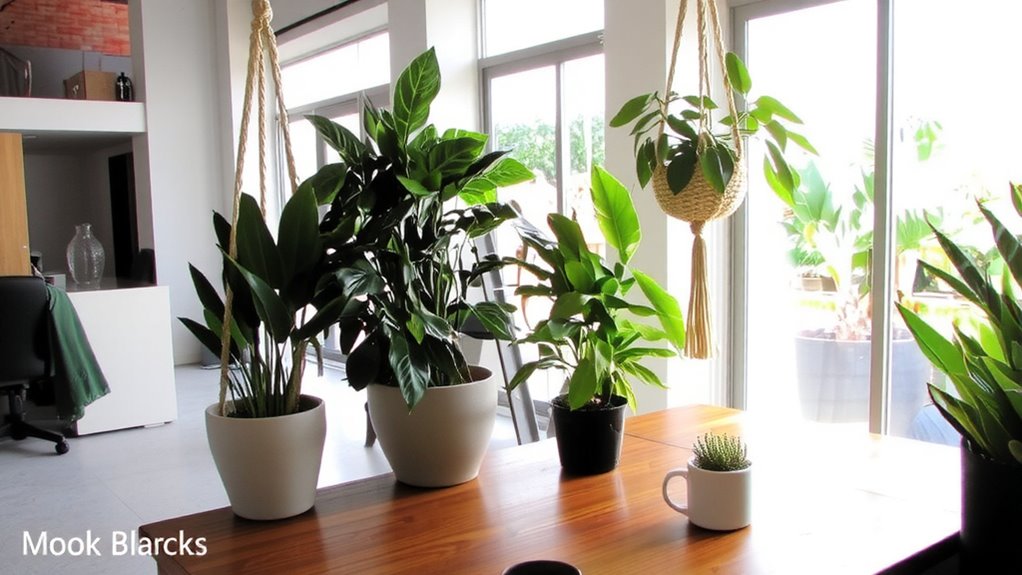
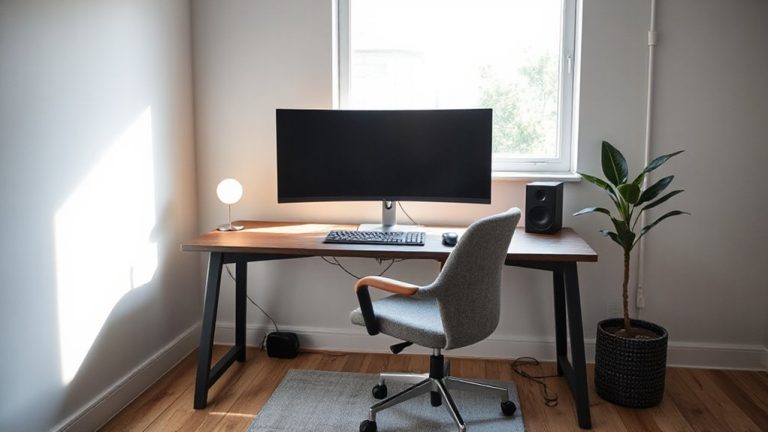
Indoor plants bring a quiet boost to air quality and mood, and choosing low-maintenance varieties guarantees long-term success without daily upkeep. You’ll benefit from plant therapy even if you’re busy or new to caring for greens-species like snake plants, ZZ plants, and pothos thrive on neglect and low light. These hardy options build resilient green corners in offices where consistency matters. They filter air mildly and add visual calm, which studies link to reduced stress and better focus. But don’t expect dramatic results overnight-real benefits come from sustained presence, not just placement. Be honest about your routine: overwatering kills more plants than under-watering. Choose pots with drainage to prevent root rot, and skip decorative covers that trap moisture. While not a fix-all, these plants are reliable tools in biophilic design when matched to actual conditions. For a curated selection of resilient options, consider these best office plants to keep your workspace vibrant and low-stress.
Use Wood, Stone, and Natural Textures
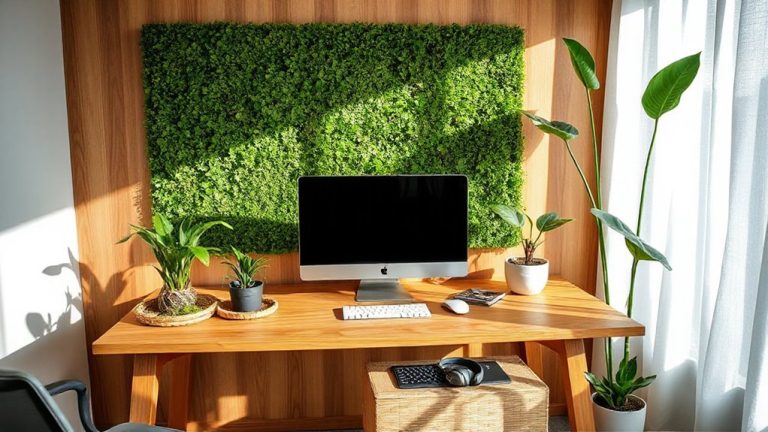
Wood, stone, and natural textures ground a space with warmth and authenticity you won’t find in plastic or painted drywall. You’ll boost visual comfort and perceived air quality by integrating wood finishes on desktops, shelves, or wall panels-materials shown in studies to lower stress markers. Stone accents on reception desks or partition bases add lasting appeal and tactile diversity. These materials work best when sustainably sourced-look for FSC-certified wood or recycled stone tiles to reduce environmental impact. While natural textures age gracefully, they require care: untreated wood can scratch, and porous stone may stain without sealing. Laminate alternatives mimic wood finishes well but lack breathability and depth. For open offices, balance is key-overuse can feel heavy or impractical. Opt for medium-toned wood finishes to reduce glare and pair stone accents with soft lighting. With proper selection and maintenance, these elements contribute reliably to a calmer, more focused workspace.
Install Water Features or Nature Soundscapes
Adding the sound of flowing water or recorded nature soundscapes can improve focus and reduce stress, especially in open offices where distractions run high. You’ll benefit from water flow’s rhythmic consistency and effective sound diffusion, which masks disruptive noises without feeling intrusive. When installed right, these systems create a calming backdrop that helps maintain concentration.
| Emotion | Trigger |
|---|---|
| Calm | Steady water flow |
| Focus | Natural sound diffusion |
| Renewal | Memory of outdoor spaces |
Look for units with adjustable volume and directional output to tailor coverage. Test models with at least 65 dB maximum output and wide-frequency diffusion for even coverage. Avoid overly loud features-distraction defeats the purpose. Some come with 3-year warranties and plug-and-play pumps, but routine cleaning is required. We’ve seen success with wall-mounted fountains and ceiling-integrated audio, but placement matters-keep water features away from desks to prevent humidity issues.
Create Outdoor Access for Mental Clarity
Why settle for a view of concrete when you can design access to open sky and greenery? Giving employees direct access to outdoor spaces like gardens or terraces boosts mental clarity and reduces stress. Studies show even short breaks in nature-rich environments improve focus and mood. Terraces with seating and shade structures offer usable square footage for informal meetings or solo work. Gardens with native plants require less maintenance and support local ecosystems. But outdoor access isn’t always feasible-urban buildings may lack space or face air quality issues. Retrofitting exits to gardens or rooftop terraces demands structural checks, waterproofing, and ADA-compliant pathways. Budget for long-term upkeep: irrigation, lighting, and weather-resistant furniture. Not every office can support large outdoor zones, but even small, well-placed green spaces with clear sightlines help. Prioritize usability, safety, and low maintenance when planning.
Choose Nature-Inspired Colors and Patterns
You don’t need a garden outside your window to tap into nature’s calming effects-your walls, floors, and furnishings can do the work too. Choose earthy tones like warm greens, soft browns, or muted blues to create a grounded, restorative atmosphere. These colors mimic natural landscapes and subtly reduce stress, according to peer-reviewed environmental psychology studies. Pair them with organic patterns-think leaf-inspired prints, wood grain, or stone textures-in area rugs, curtains, or acoustic panels to add depth without visual noise. While these design choices can improve focus and mood, avoid overdoing it; too many patterns strain attention over time. Test samples under your office lighting, as LED and fluorescent bulbs can distort earthy tones. Look for fade-resistant fabrics and low-VOC paints with at least a 5-year warranty to maintain quality. Used thoughtfully, nature-inspired palettes enhance your workspace without demanding extra maintenance.
On a final note
You should incorporate biophilic design-it boosts focus and lowers stress. Maximize natural light with sheer blinds or light-reflective surfaces, and place low-maintenance plants like snake or pothos in well-ventilated spots. Use real wood desks or stone coasters for texture. Add a small desktop fountain or use nature sound apps, but guarantee they don’t disrupt concentration. Outdoor access helps, but even views of trees help. Choose matte finishes in earth tones to reduce glare. However, avoid overloading space-clutter counters benefits. Test changes over two weeks to gauge real impact.