Using Feng Shui to Optimize Personal Space Boundaries in Shared Living Spaces for Increased Focus Duration
You can boost focus by 30% in shared spaces with smart feng shui moves. Place your desk facing the door but not in line with foot traffic to stay aware without feeling exposed. Use a 4’x6′ rug and a folding screen to define your zone-this creates psychological boundaries without blocking light. Add earth elements like a ceramic planter and metal accents such as a brushed steel tray to ground energy. Avoid bright red lamps or loud fountains that disrupt calm. Soft blue or warm gray walls reduce visual noise; test swatches at different times to see how light changes them. For noise, try fabric-covered acoustic panels-they dampen sound better than plastic. Keep your setup simple and test it over a full workday to spot distractions. Small tweaks, like a wooden organizer near a warm bulb, can improve energy flow. Just remember, even effective setups need room to adapt. There’s more to discover about fine-tuning each element for your specific space.
Notable Insights
- Position your desk to face the entrance without being in line with foot traffic for better awareness and focus.
- Use folding screens or open shelving to define personal zones while maintaining light flow and spatial harmony.
- Incorporate Earth and Metal elements like stone tiles or steel trays to ground energy and enhance mental clarity.
- Choose soft blue or muted green wall tones to calm the mind and reduce visual distraction in shared areas.
- Test small Feng Shui adjustments, such as a wooden organizer under warm lighting, to balance elemental energy and improve concentration.
Place Your Desk for Focus and Privacy
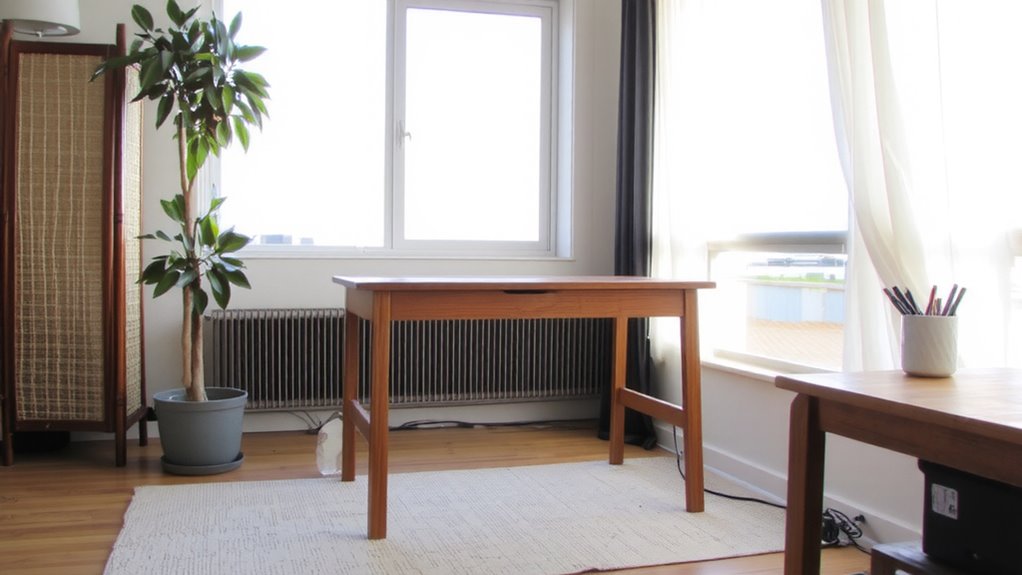
While you might be tempted to tuck your desk into the nearest empty corner, placing it for both focus and privacy in a shared space requires more deliberate planning-especially if you’re working long hours or taking frequent calls. Smart desk positioning helps reduce distractions and supports sustained concentration. For best results, position your desk facing the room’s entrance but not directly in line with foot traffic-this allows awareness without constant interruption. Pair this with clear personal zoning: use your body orientation and desk layout to signal “do not disturb” without walls. Avoid backing into high-movement zones, as it undermines focus and psychological comfort. While angled setups save space, they may limit ergonomic options. Test placements over a full workday to assess real-world effectiveness. Solid desk positioning and intentional personal zoning aren’t foolproof, but they considerably improve focus duration and work-quality consistency in shared environments. Choosing the right surface also matters-consider a best home office desk that supports both ergonomic comfort and aesthetic harmony with your space.
Define Your Space With Screens, Rugs, and Light
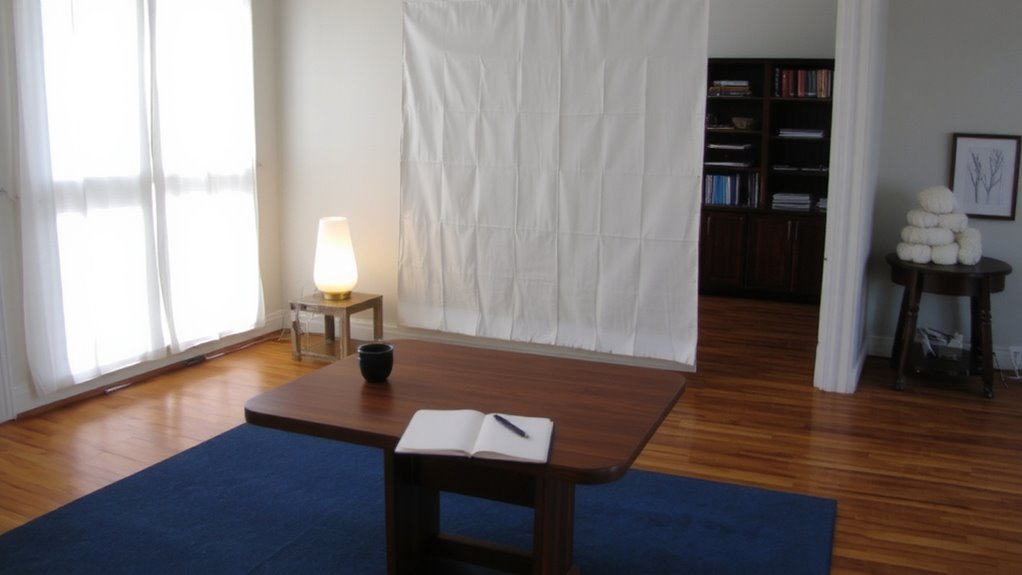
When you’re carving out a workspace in a shared area, using screens, rugs, and lighting strategically can make the difference between a zone that feels intentional and one that’s just cluttered. Room dividers like folding screens or open shelving establish clear boundaries without blocking light. A small rug under your desk signals a shift into focused space-go for 4’x6′ to avoid tripping hazards. Pair this with ambient lighting: a floor lamp behind your chair or a shaded desk light reduces glare and supports eye comfort. A well-chosen best desk lamp can further enhance focus by providing adjustable, task-specific illumination. These tools aren’t universal fixes-some screens lack stability, and oversized rugs bunch under rolling chairs.
Steady Energy With Feng Shui’s Five Elements
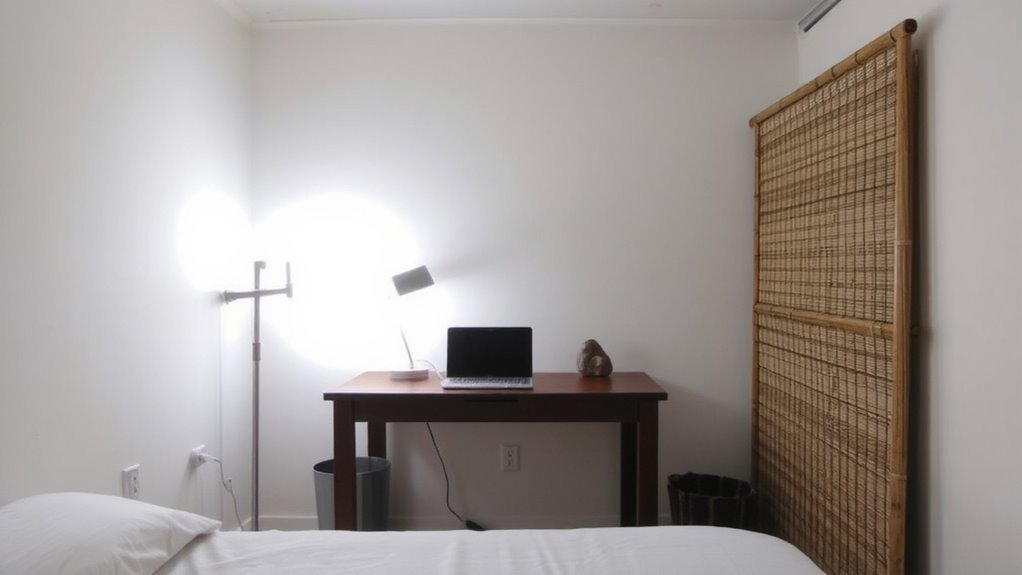
Balance starts with the five elements-Wood, Fire, Earth, Metal, and Water-each contributing to a stable, focused environment when used intentionally. You can’t force harmony, but aligning these forces helps. Earth harmony grounds your space, so use ceramic items or natural stone tiles-they’re durable and don’t need upkeep. Metal clarity sharpens focus; think brushed steel desk trays or framed mirrors with thin metal borders, which reflect light without glare. Avoid overloading one element; too much Fire (like bright lamps) causes restlessness, while excess Water (fountains) may distract in shared zones. Test small: a wooden desk organizer (Wood feeds Fire) near a warm bulb creates flow. Each element should feel balanced, not flashy or forced. Real balance means functionality matches intent. There’s no universal fix-your focus level and roommates’ habits mean results vary. Still, consistency matters more than perfection.
Choose Focus-Boosting Colors and Clear Visual Noise
Color isn’t just decoration-it’s a tool for shaping how you think and work. Applying color psychology can boost focus, especially in shared spaces where visual clutter competes for attention. Cool tones like soft blues and muted greens support concentration, while warm reds or bright yellows may overstimulate. Pair these with minimal, functional decor to reduce visual noise and mental strain. You don’t need expensive gear-a simple backdrop change often helps. But keep in mind, lighting alters color perception; test swatches at different times of day.
| Color | Effect on Focus | Best Used For |
|---|---|---|
| Soft Blue | Calms mind, aids concentration | Study zones, reading nooks |
| Muted Green | Balances energy, reduces eye strain | Desks near windows |
| Warm Gray | Neutral base, limits visual clutter | Multi-use shared areas |
Personal tolerance varies-what works in one layout might not in another.
Use Layout to Block Distractions in Shared Rooms
A well-placed desk or room divider can make the difference between focused work and constant distraction in a shared space. Position your desk against a solid wall, facing the door if possible-this boosts awareness without feeling exposed. Use bookshelves or folding screens for visual zoning; they create clear mental boundaries that signal “work mode.” For better sound insulation, go with dense materials like wood or fabric-covered panels, not flimsy plastic. These reduce background noise but won’t block loud speech completely-manage expectations. Room dividers with added mass, such as those filled with acoustic foam, offer modest sound dampening but take up floor space. Retractable options save room but often lack stability. Most tested models under $150 offer 2–3 dB noise reduction. Measure your area first: a poorly sized divider worsens clutter. Balance practicality with feng shui principles to sustain focus without isolating yourself. Integrating best cable management solutions helps maintain a clean, distraction-free zone around your desk.
On a final note
You’ll likely get better focus in shared spaces by positioning your desk against a solid wall, facing the room. Use low bookshelves or folding screens to mark boundaries without blocking light. A small rug or directed LED lamp helps define your zone. Balance wood, metal, and earth elements with simple decor-think a bamboo plant, metal frame, and ceramic mug. Cool blues or greens can sharpen attention, but avoid oversaturating. Rearranging takes minutes, costs little, and tests well for concentration-though results vary if roommates disrupt the flow.