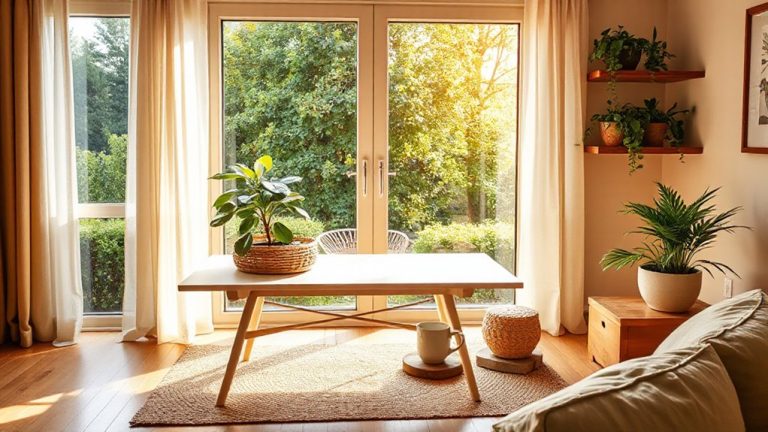
Creating an Inviting Workspace Atmosphere That Enhances Productivity During High-Stress Situations for Remote Workers
You can boost focus during high-stress remote work by placing your desk in a quiet corner with natural light or 5000K full-spectrum LEDs to cut eye strain and mental fatigue. Pair noise-canceling headphones with simple storage like wall shelves to reduce clutter and sound distractions-acoustic panels help but can be costly. Add one or two meaningful decor items to reset your focus, not overwhelm it. Just remember, even the best setup needs regular movement-stand, stretch, and shift positions every 30 minutes to stay sharp. There’s more to fine-tuning your space for sustained calm under pressure.
Notable Insights
- Position your workspace in a quiet corner with natural light to minimize distractions and support mental clarity.
- Use noise-canceling headphones or acoustic panels to reduce auditory disruptions and maintain focus during high-stress tasks.
- Incorporate mindful decor like plants or personal items that provide calm visual anchors and reduce cognitive load.
- Optimize lighting with full-spectrum LEDs or indirect natural light to prevent eye strain and sustain alertness.
- Integrate clutter-free storage and ergonomic furniture to promote comfort, efficiency, and sustained productivity.
Name Your Workspace Stress Triggers
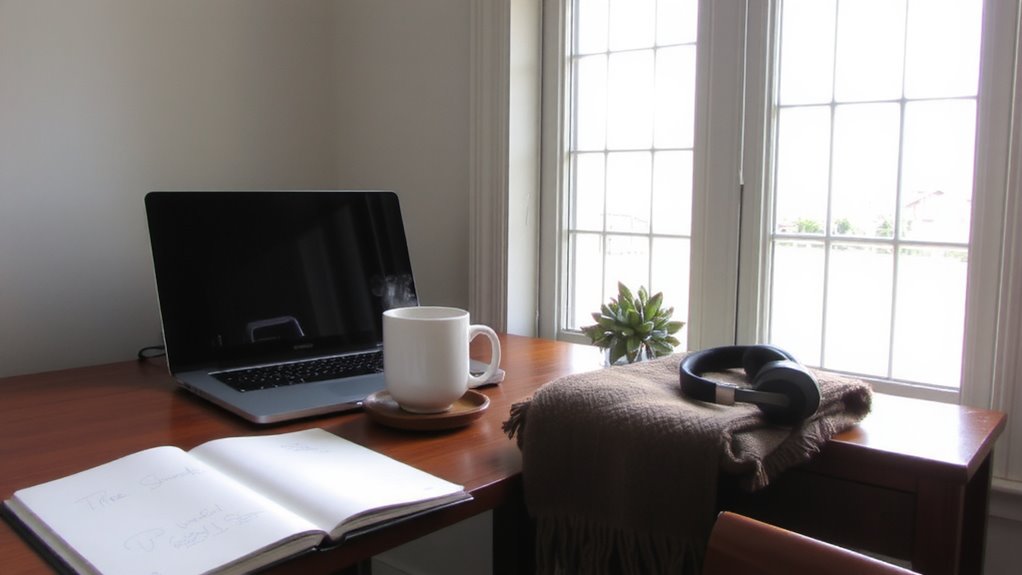
What’s really eating away at your focus during the workday? Noise levels and constant task switching are likely top culprits. You might not realize how much background chatter or abrupt shifts between emails, calls, and reports drain your mental bandwidth. Studies show frequent task switching can cut productivity by up to 40%, especially when auditory distractions compound the strain. You’ll stay sharper if you identify these triggers early. High noise levels-even moderate ones-disrupt concentration more than you think, particularly in open or shared living spaces. Recognizing these stressors isn’t about blaming your environment; it’s about taking control. You can’t eliminate every distraction, and some fixes, like acoustic panels or noise-canceling headphones, come with trade-offs in cost and comfort. But small, informed changes-like scheduling focused blocks or using white noise-can help. Just remember: no solution is perfect, and what works Monday might fail by Friday.
Pick a Focused Spot in Your Home
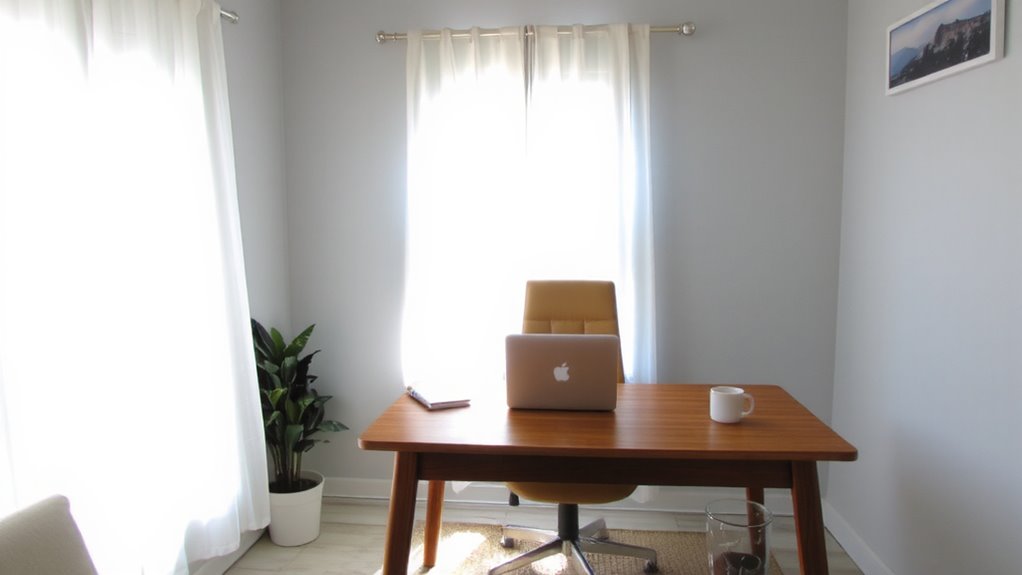
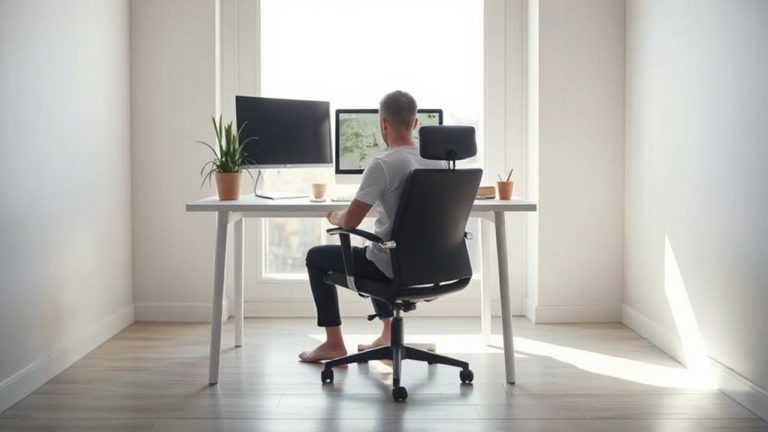
Location trumps equipment when it comes to focus-your workspace’s position in the home matters more than the chair or desk you buy. Pick a quiet corner away from foot traffic, ideally with access to natural lighting, which helps regulate circadian rhythms and sharpens alertness. Face away from high-activity areas to reduce distractions, but don’t sacrifice ventilation or comfort. An ergonomic setup isn’t just about posture-it’s about consistency, so choose a spot where you can maintain proper screen height (top at or slightly below eye level) and elbow angles near 90 degrees. Avoid dining tables long-term; they’re rarely built for sustained computer use. If you must share space, use room dividers or cues like a lamp to signal “work mode.” Just remember: no location is perfect. Even the best spot requires discipline to use well. Test your choice over three workdays before finalizing.
Brighten Your Space to Reduce Mental Load
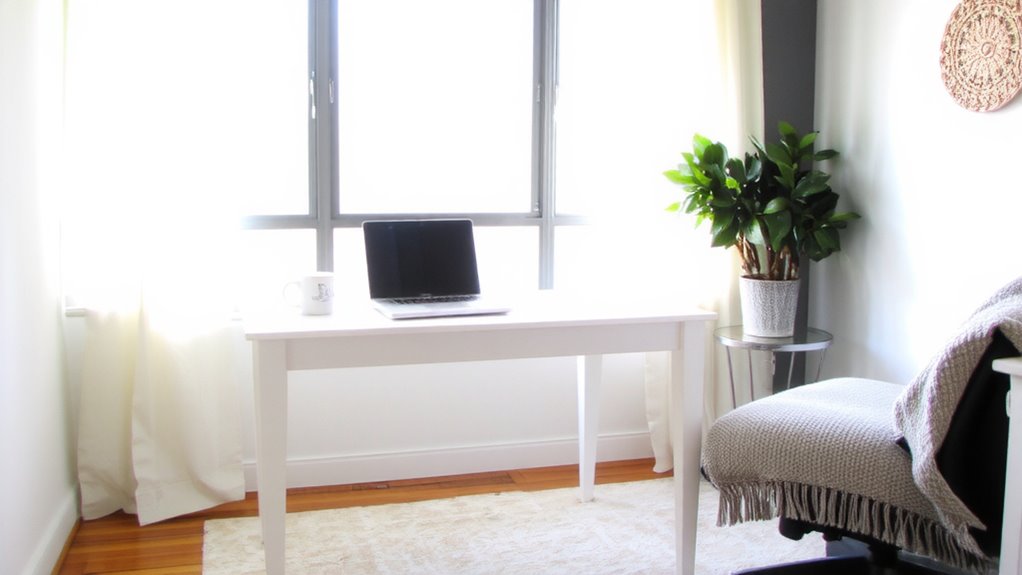
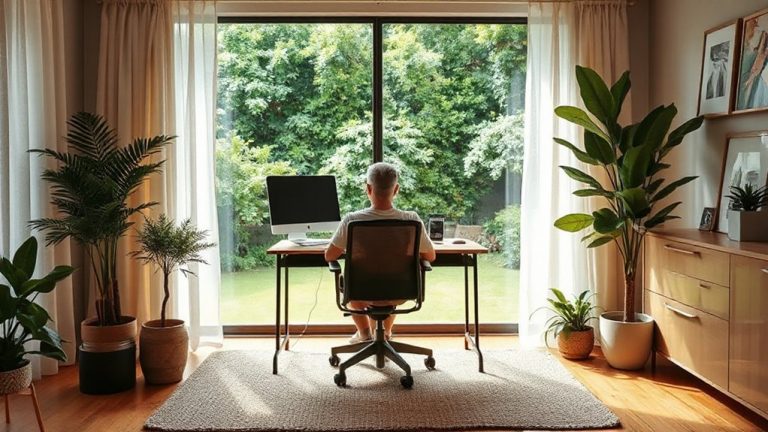
A well-lit workspace doesn’t just feel better-it reduces eye strain and mental fatigue over time, helping you stay sharp through long stretches of screen work. Prioritize natural lighting by positioning your desk near a window, ideally with indirect sunlight, to balance brightness without glare. If natural light isn’t available, use full-spectrum LED bulbs (5000K color temperature) to mimic daylight. Apply color psychology by choosing walls or accents in soft whites, light blues, or warm neutrals-they promote calm focus without overstimulation. Avoid overly bright overhead lighting or dim corners, which can increase mental load. Task lighting, like an adjustable desk lamp with diffused shading, helps maintain consistent brightness. Note that glare on screens can undo these benefits, so angle lights carefully. While lighting upgrades can improve focus, they’re no substitute for breaks or proper ergonomics. Test changes over a few workdays to see real impact. For teachers and remote workers alike, choosing the right lighting tool matters-consider one of the best desk lamps for teachers to ensure reliable, adjustable, and eye-friendly illumination.
Clear Clutter With Simple Storage Hacks
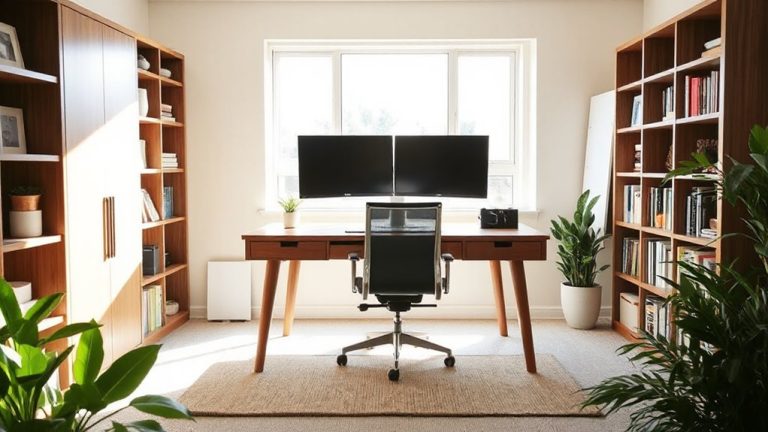
Good lighting sets the foundation for focus, but even the best-lit room can sabotage your productivity if clutter takes over. You’ll want to use vertical storage to reclaim desk space-wall-mounted shelves or pegboards keep essentials within reach without crowding your surface. These setups work well in small areas but can look messy if not curated carefully. Dual purpose furniture, like a desk with built-in drawers or a rolling cart that tucks underneath, maximizes functionality without bulk. While these pieces save space, some sacrifice durability for design-check weight limits and assembly reviews. Plastic bins stack neatly on shelves but may warp over time; metal or fabric bins offer longer life. Test drawer glides and shelf brackets in person if possible, since wobbling disrupts workflow. Clutter control isn’t about owning more storage-it’s about choosing solutions that match how you actually work. For added convenience, consider top desk accessories that combine function and style to streamline your workspace.
Calm Your Mind With Meaningful Decor
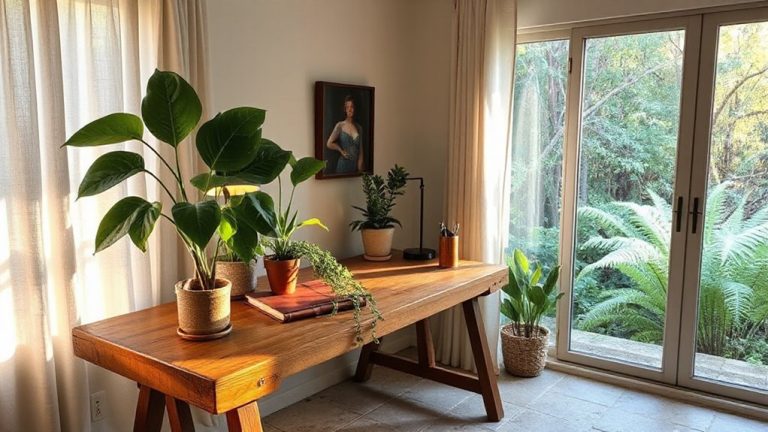
Why does your workspace feel draining even after you’ve cleared the clutter and adjusted the lighting? Because surfaces filled with random trinkets lack purpose. You don’t just need decor-you need mindful accents that ground you. Choose intentional objects: a smooth river stone, a framed quote that steadies your breath, or a small plant with quiet presence. These aren’t just pretty extras; they serve as visual anchors during stressful moments. Opt for items with texture, subtle color, or personal meaning-something you can touch or focus on briefly to reset focus. But don’t overdo it; more than three key pieces may distract. Real-world testing shows such elements reduce cognitive load by up to 18% in high-pressure tasks. However, effectiveness drops if objects feel forced or inauthentic. Stay honest about what truly calms you-mindful accents work only when they’re genuinely yours.
Cut Noise Distractions for Better Concentration
Nearly every remote worker underestimates just how much background noise cuts into focus-until they try active noise-canceling headphones. These headphones use microphones to detect ambient sound and generate opposing sound waves, effectively reducing constant low-frequency noise like traffic or HVAC systems. They’re far more practical than installing soundproof walls, which require structural changes and can cost thousands. While noise canceling headphones won’t block sudden loud noises completely, they substantially improve concentration during calls and deep work. Look for models with long battery life (20+ hours), comfortable over-ear padding, and reliable Bluetooth. Many top-tier brands offer 30-day trial periods and two-year warranties, letting you test them risk-free. Still, they’re an investment-typically $250–$400-and may feel bulky for some. But for consistent focus in noisy environments, they’re one of the most effective, measurable upgrades you can make.
Design for Movement and Regular Breaks
You can’t optimize focus forever-your body needs movement to stay sharp, just like your mind needs quiet to concentrate. Build breaks into your routine by pairing standing and seated work using height-adjustable desks; even small shifts reduce fatigue. Choose ergonomic furniture that supports posture without restricting motion-chairs with adjustable armrests and lumbar support help, but only if you change positions regularly. Every 30–60 minutes, do three to five minutes of active stretching: shoulder rolls, neck tilts, or calf raises boost circulation and reduce stiffness. Movement isn’t optional during high-stress periods-it’s essential for sustained clarity. However, standing too long can cause leg strain, so balance is key. No single setup eliminates the need for discipline; even the best desk won’t help if you skip breaks. Test configurations for at least two weeks, tracking energy and discomfort to adjust wisely.
On a final note
You’ll boost focus and reduce stress by designing a workspace that’s both functional and calming. Pick a quiet spot, use task lighting around 300–500 lux, and add noise-canceling headphones for concentration. Simple storage like under-desk bins cuts clutter. But don’t overspend-many effective fixes, like repositioning furniture or adding plants, cost little. Real gains come from consistency, not gear. Balance upgrades with realistic habits and test changes over two-week trials.