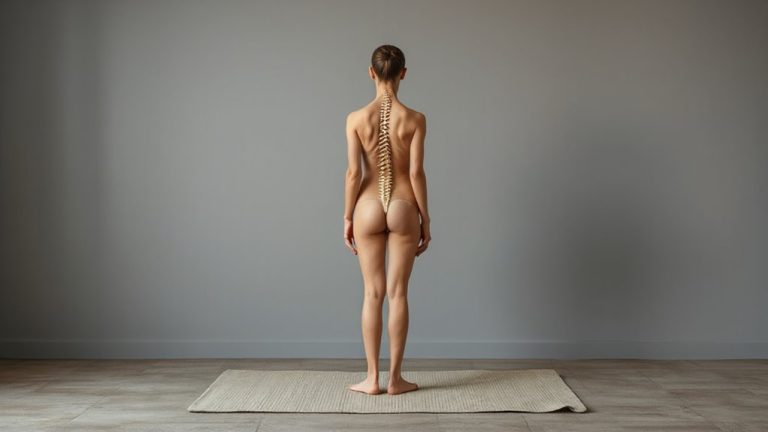
Combatting Hip Flexor Tightness Through Prolonged Sitting: Exercises to Stay Comfortable at Work
You can reduce hip flexor tightness from sitting by doing quick, consistent stretches at your desk. Try seated knee lifts for 10–15 seconds or a standing low lunge with a tucked pelvis for 30 seconds per side. Hourly movement breaks, like shifting forward on one leg, help reset muscle length. Foam rolling aids release, but if you feel sharp pain or numbness, see a doctor. Ergonomic chairs and standing desks alone won’t fix it-movement is key. There’s more to optimizing your workspace for hip health than just stretching.
Notable Insights
- Prolonged sitting shortens hip flexors like the iliopsoas, leading to tightness and reduced mobility over time.
- Perform seated knee lifts for 10–15 seconds hourly to counteract hip flexor shortening during work.
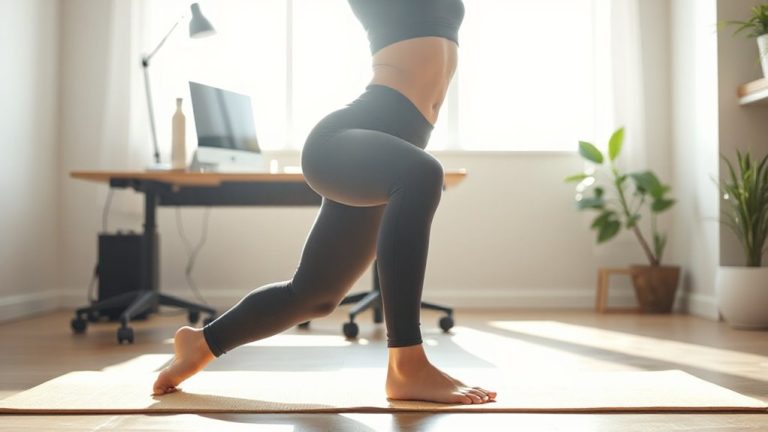
- Do standing low lunges with a tucked pelvis for 30 seconds per side to stretch tight hip flexors.
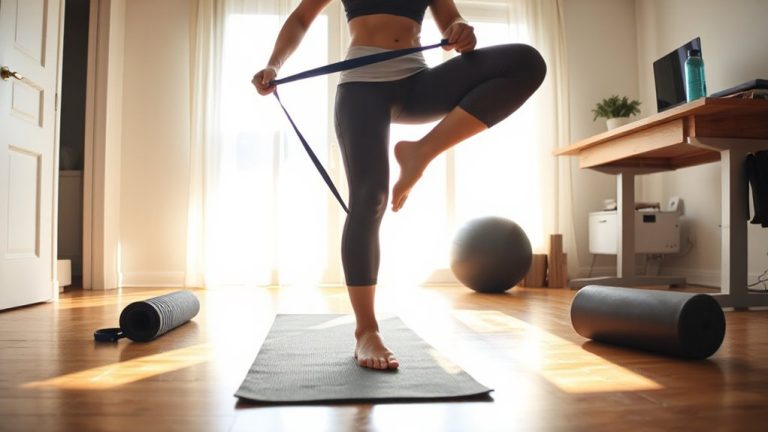
- Use a standing figure-four stretch with a slight squat to release tension in deep hip rotators.
- Seek medical advice if sharp pain, numbness, or limited movement occurs despite regular stretching.
How Sitting Shortens Your Hip Flexors
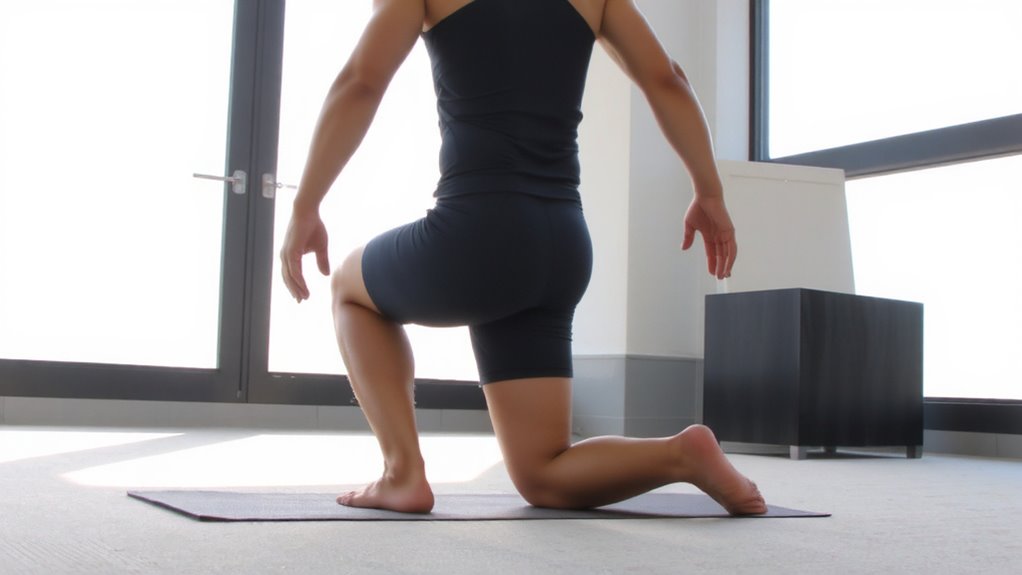
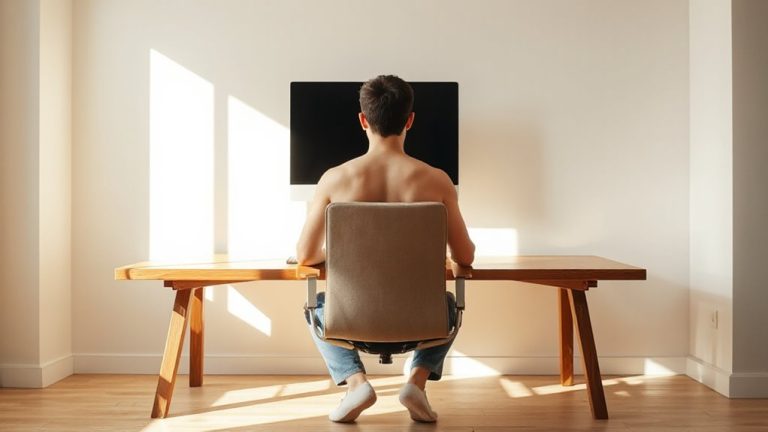
Sitting for long stretches keeps your hip flexors in a shortened position, and over time, they adapt to that range-making them tighter and less flexible. This is due to muscle adaptation, where your body starts to treat the bent hip angle as the new normal. In hip anatomy, the iliopsoas and rectus femoris cross the joint, so prolonged sitting reduces their functional range. You might not feel pain right away, but tightness builds silently, affecting movement quality. While standing desks or ergonomic chairs claim to help, they don’t reverse adaptation alone. Real change requires intentional movement breaks every 30–60 minutes. Set a timer, stand, and gently extend your hips-like a short lunge-to reset the muscle length. Don’t rely on gear; prioritize motion. Even with perfect office setup, inactivity overrides design benefits. Your body responds to use, not just posture. Pairing regular movement with the use of a best standing desk stool can further encourage active sitting and improved hip alignment.
Fix Your Posture by Releasing Tight Hips
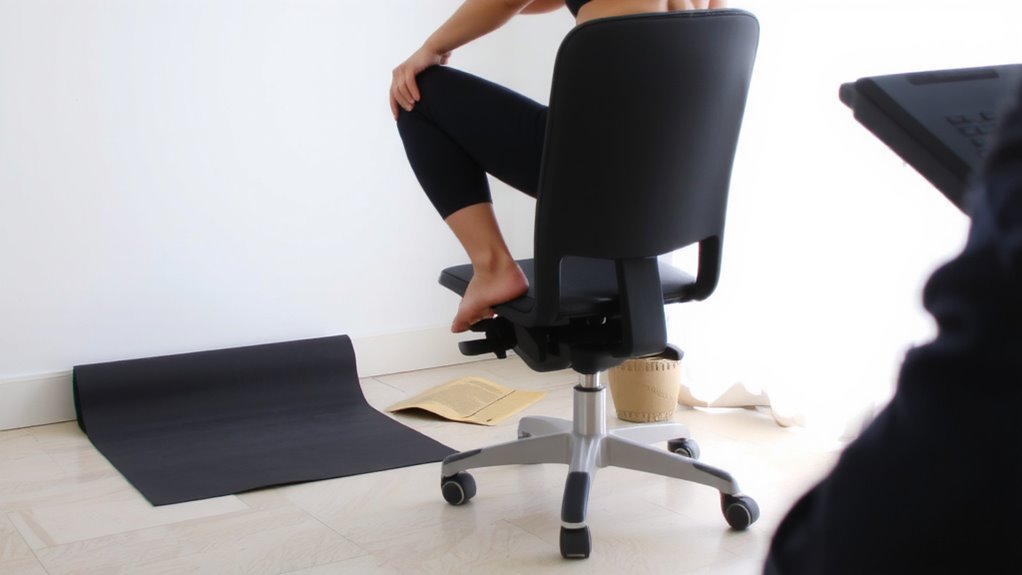
Why does your lower back ache after a long day, even if you’re using an ergonomic chair and standing desk? Because tight hips pull your pelvis forward, messing with your hip alignment and disrupting muscle balance. You can have the most adjustable sit-stand desk or lumbar-supporting chair, but if your hip flexors are shortened, your posture stays compromised. Releasing tension in these muscles helps reset your pelvis to a neutral position, which reduces lower back strain. Proper hip alignment supports natural spine curvature, while restored muscle balance prevents overuse in compensating muscles like your glutes or lower back. You’ll feel more stable and less fatigued. Rolling on a foam roller or using a firm massage ball for a few minutes daily can make a noticeable difference-just don’t overdo it. Consistency matters more than intensity, and results build over weeks, not days.
5-Minute Desk Stretch for Instant Hip Relief
You can release built-up hip tension in under a minute-even at your desk-without special gear or a full routine. This quick move boosts dynamic mobility and corrects seated alignment, helping offset prolonged sitting. Perform it hourly to maintain circulation and joint comfort.
| Action | Duration | Focus Area |
|---|---|---|
| Sit tall | 10 sec | Spine alignment |
| Lift right knee | 15 sec | Hip flexor stretch |
| Press knee down | 20 sec | Tension release |
| Switch legs | 15 sec | Balance |
| Breathe deeply | 14 sec | Relaxation |
This stretch requires no tools and fits tight schedules. While it won’t replace longer mobility work, it supports joint health during long workblocks. Don’t force depth-gentle tension is enough. Overdoing it risks strain, especially if you’re new to dynamic mobility. Consistency matters more than intensity.
Stand and Stretch: 3 Quick Hip Flexor Moves
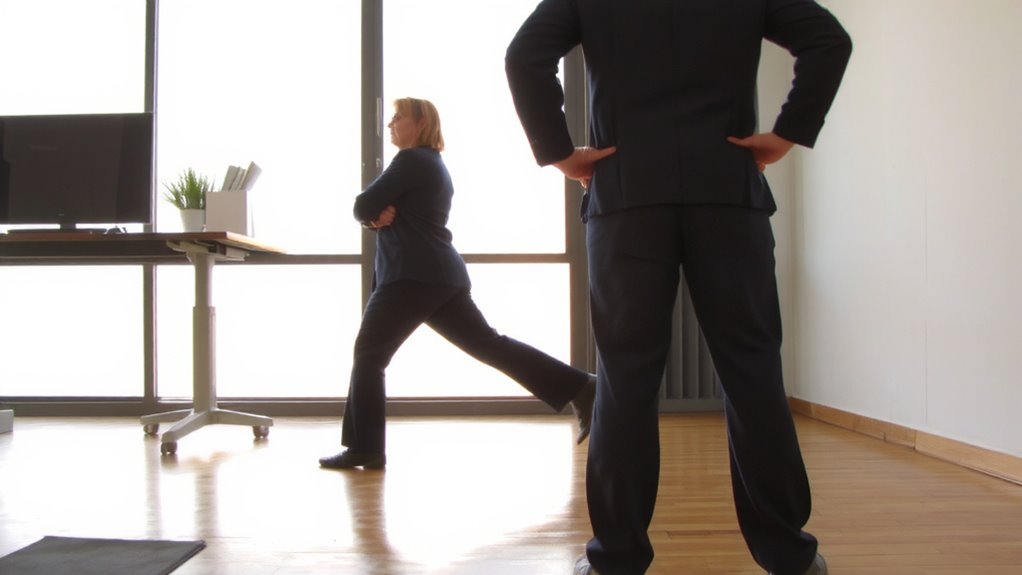
While staying seated for hours restricts hip mobility, you can counteract stiffness with three effective standing stretches that require no equipment and take just five minutes total. Start with active standing in front of your desk-step one foot back into a low lunge, keeping your front knee aligned over the ankle. Engage your glutes and gently tuck the pelvis to feel a stretch in the back hip flexor. Hold for 30 seconds, then switch sides. Next, perform a standing figure-four stretch by crossing one ankle over the opposite thigh and squatting slightly-this targets deeper hip rotators. Finish with gentle swaying side to side during a forward fold from active standing, loosening tight hip flexors and hamstrings. Avoid overstretching; mild tension is normal, but sharp pain means you’ve gone too far. These moves aren’t a fix for poor posture or prolonged sitting-they’re effective only when done consistently.
Loosen Tight Hips With 1-Minute Hourly Moves
If you’re spending most of your day at a desk, integrating a javelin hip mobility move every hour can greatly reduce tightness without disrupting your workflow. This quick stretch boosts hip mobility and prompts subtle muscle activation, countering the stiffness from prolonged sitting. Stand, step one leg forward, and gently shift your weight forward while keeping your torso upright-hold for 30 seconds per side. It’s not about intensity; consistency matters more. You’ll feel a mild release in the front of your hip, signaling improved circulation and reduced tension. No gear’s needed, though a nonslip mat can help if your floor is slick. Results vary, but most notice improved comfort within a few days. Don’t expect miracles-this isn’t a fix for chronic issues-but as a maintenance tool, it’s efficient. Overdoing it may irritate, so stick to one minute hourly. Minimal effort, real benefit-but stay realistic about what a short move can achieve.
When Tight Hips Need a Doctor
How do you know when tight hips go beyond everyday stiffness? If you’ve tried stretches and movement breaks but still feel sharp pain, numbness, or limited range of motion, it might be time for a medical consultation. Persistent discomfort could signal an underlying hip injury diagnosis, like a labral tear or tendonitis, not just muscle tightness. Swelling, clicking sounds, or pain that worsens with activity are red flags. Unlike typical soreness from sitting, these symptoms often need imaging or physical tests for proper assessment. While simple fixes help many, they’re no substitute for professional evaluation when something feels off. Delaying care might worsen the issue, leading to longer recovery. A doctor can confirm whether it’s mechanical, inflammatory, or structural. Don’t guess-get clarity. Early diagnosis improves outcomes, especially if work or daily function is affected.
Swap Sitting for These Hip-Friendly Habits
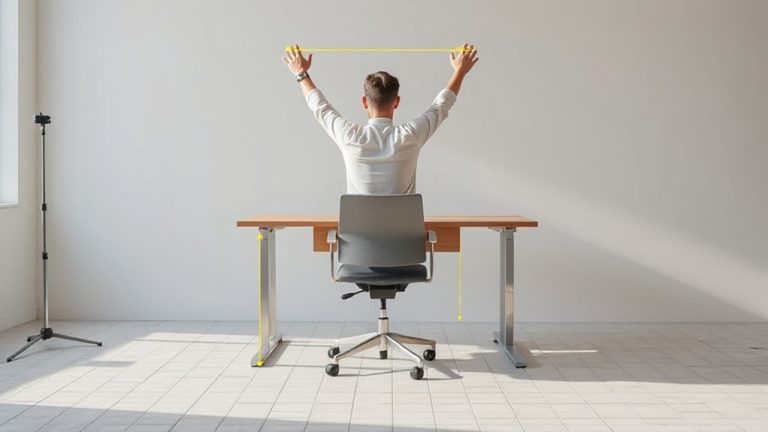
A standing desk can be a game-changer for hip health, especially if you’re stuck sitting all day. Alternating between sitting and standing supports active sitting-engaging core muscles and reducing hip flexor strain. Experts recommend standing breaks every 30 to 60 minutes for at least five minutes to reset posture and improve circulation. While sit-stand desks are effective, they aren’t a cure-all; improper setup can lead to back or leg discomfort. Make sure the standing height allows elbows at 90 degrees and the monitor at eye level. Anti-fatigue mats help, but prolonged standing may increase foot or knee stress. Pair standing breaks with gentle stretches for best results. These habits work best when integrated into a broader movement routine. No gear replaces consistent motion, but used wisely, standing desks and active sitting strategies can reduce tightness and support long-term hip function without overpromising results. For added flexibility, consider a portable standing desk stool that supports dynamic sitting and promotes better posture on the go.
On a final note
You can manage hip flexor tightness from sitting, but it takes consistent effort. Stretching hourly-even for one minute-helps, especially with moves like seated pelvic tilts or standing hip flexor lunges. Pair these with a sit-stand desk used at 38 inches height to reduce strain. Results vary; some feel relief in days, others need weeks. No gear replaces movement, and even the best ergonomic chair won’t fix stiffness if you don’t stand regularly.