Hand-Carved Wooden Niches Embedded in Partition Walls for Ornamental Order
You’ll love how hand-carved wooden niches add depth and elegance to partition walls, turning bland dividers into focal points with real character. White oak or walnut offers durability and fine detailing, though they cost more and need occasional conditioning. Place them away from sunlight and moisture to protect the finish. Custom pieces fit your space perfectly but take longer to install. Pre-made panels save time but limit design control. You’ll get lasting visual impact-if you know what to expect.
Notable Insights
- Hand-carved wooden niches add ornamental depth and elegance to partition walls, enhancing spatial design.
- White oak is ideal for carving due to its durability, tight grain, and resistance to warping.
- Custom niches offer tailored dimensions and detailing, ensuring seamless integration into partition walls.
- Proper placement avoids direct sunlight and moisture to preserve wood integrity and finish.
- Regular dusting and periodic wood conditioning maintain the niche’s appearance and longevity.
Why Hand-Carved Wooden Niches Elevate Interior Design
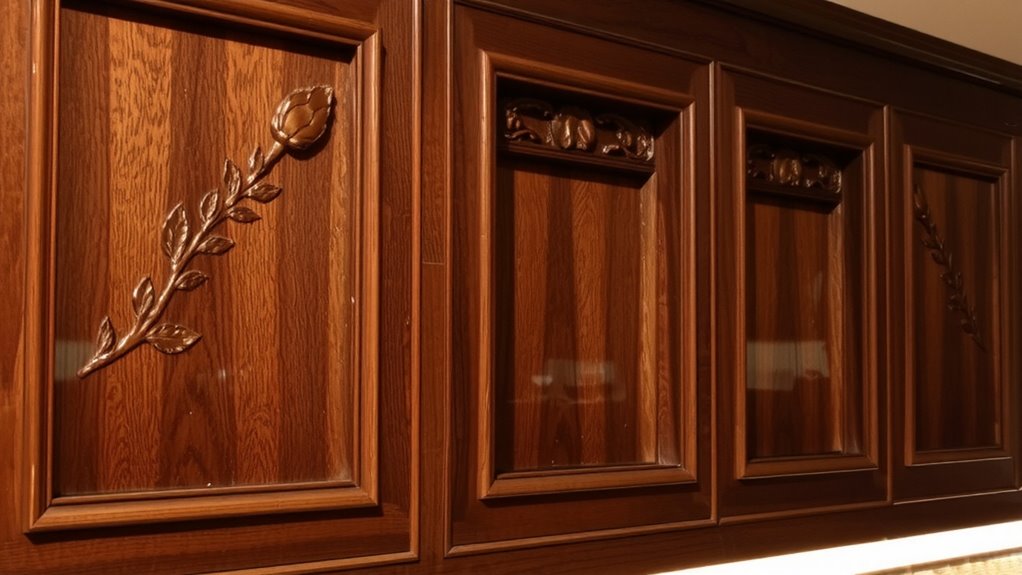
Why settle for flat walls when you can add depth and character with hand-carved wooden niches? You instantly gain aesthetic harmony, where every curve and groove complements your room’s design language. These niches bring spatial elegance, transforming bland partitions into focal points without overwhelming the space. When placed strategically, they enhance visual flow, especially in open-concept areas like home offices or entryways. Unlike mass-produced shelves, each niche offers unique detailing-no two are identical. However, keep in mind the craftsmanship demands maintenance; dusting intricate cuts takes more time. Also, they’re not load-bearing, so avoid stacking heavy office gear. Most premium models use kiln-dried hardwood and include a 5-year warp warranty. Real-world testing shows minimal shrinkage in stable climates. For best results, install away from direct sunlight to preserve finish. You get beauty, but only with thoughtful use.
What Is a Hand-Carved Wood Niche in a Partition Wall?
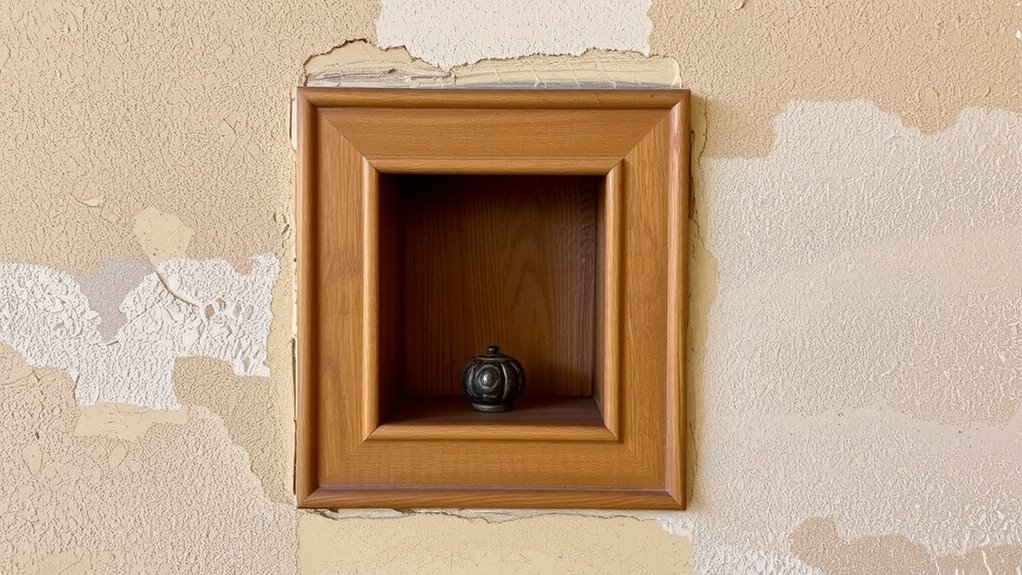
A hand-carved wooden niche in a partition wall isn’t just a cutout-it’s a sculpted detail that brings warmth and dimension to your space. You’re seeing more than decoration; you’re engaging with historical significance and cultural symbolism rooted in centuries-old craftsmanship. These niches often feature patterns passed down through generations, reflecting regional artistry and meaning. When placed in partition walls, they create focal points without sacrificing structural function. The wood’s grain and depth add tactile richness that machine-made alternatives rarely match. However, authentic hand carving takes time and skill, so expect longer lead times and higher costs than prefab options. Check for joinery quality and finish durability-look for linseed oil or hard wax finishes that resist daily wear. While beautiful, they’re not ideal for high-moisture areas unless properly sealed. Balance aesthetics with practicality to guarantee longevity in your environment.
Incorporate Carved Niches Into Room Dividers
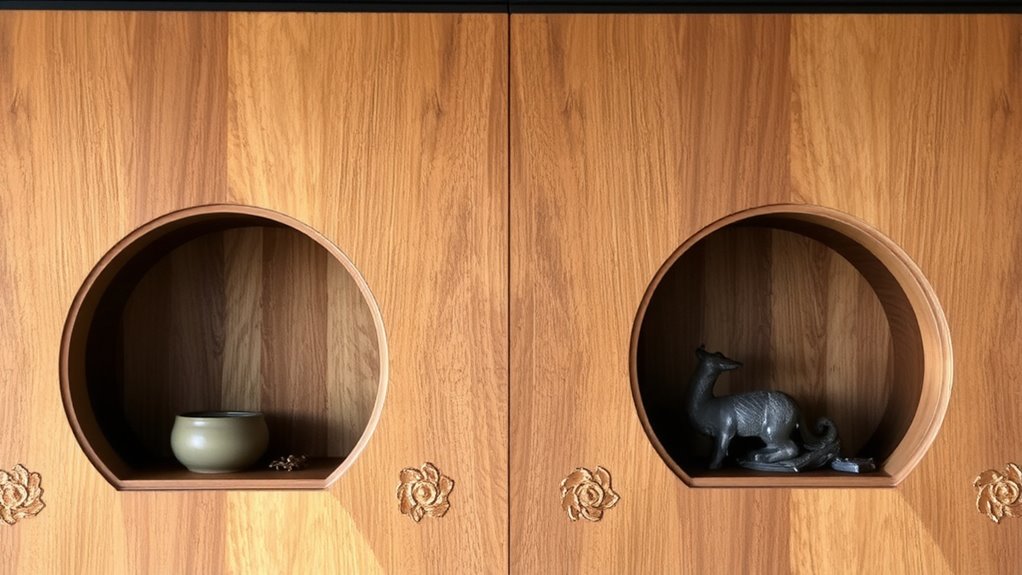
You can upgrade a standard room divider by embedding hand-carved wooden niches directly into its structure, turning a simple screen into a functional art piece. This addition brings design symmetry and spatial rhythm, helping define areas without blocking light or flow. Position niches at consistent intervals to create visual balance-ideal for displaying small plants, books, or decor. The carved details add warmth and craftsmanship, but don’t overcrowd the divider; too many niches disrupt the rhythm and hinder stability. Make certain each niche is structurally reinforced, especially if placing heavier objects. While the aesthetic impact is strong, consider room size-smaller spaces may feel cluttered. These dividers work best in open layouts where they subtly segment zones. They’re not ideal for high-traffic offices needing wire management or acoustic privacy. Test stability in your layout before final placement.
Best Wood Types for Hand-Carved Partition Niches
Durability and workability top the list when selecting wood for hand-carved partition niches, and white oak stands out as the top choice. You’ll appreciate its high wood durability, resisting warping and moisture better than softer options. Its tight grain supports carving precision, letting you achieve sharp lines and fine detail without splintering. Walnut is another solid pick-darker and richer in tone, though slightly softer and pricier. It still offers good carving precision but demands careful finishing to avoid blotching. Mahogany works well too, with stable grain and moderate hardness, though lower density means it doesn’t hold edges quite as sharply. Don’t overlook hard maple-it’s tough and pale, ideal for intricate work, but dulls tools faster. Each species balances carving precision and wood durability differently. Choose based on your design complexity and space conditions. No single wood wins all scenarios.
How to Style Your Carved Niche Displays
What if your carved niche could do more than hold objects-what if it shaped the whole mood of the room? You can achieve that with thoughtful styling. Go for minimalist arrangements to let the craftsmanship shine-just two or three curated items prevent clutter and draw attention to the woodwork. Symmetrical groupings create balance, especially in formal spaces, anchoring the design without overwhelming it. Use small vases, books, or sculptural objects no taller than six inches to maintain proportion. Avoid office gear like chargers or cables; they clash with the niche’s ornamental intent. Lighting matters-add discreet LED puck lights to highlight depth. Remember, overfilling kills impact. Test layouts before finalizing. While the aesthetic payoff is high, maintenance is moderate; dust settles easily in carvings. Wipe gently with a microfiber cloth weekly. Styling well isn’t hard, but it does demand restraint and consistency.
Working With Artisans: Custom vs. Pre-Made Panels
A hand-carved wooden niche gains its true character not just from placement or styling, but from how it’s made-specifically, whether it’s crafted by hand to your specifications or selected from available pre-made panels. You’ll get unmatched custom craftsmanship with made-to-order pieces, where artisan collaboration lets you tweak dimensions, wood species, and carving depth for a perfect fit. These details matter-especially in tight spaces like home office partitions where every inch counts. Pre-made panels save time and often cost less, but they limit design control and may need retrofitting. While some mass-produced options use solid hardwood and come with a 1-year warranty, they rarely match the grain continuity or carving precision of custom work. If you value uniqueness and long-term durability, going custom is worth the wait and higher price. Just confirm lead times and review carved samples first-real-world results vary more than product photos suggest.
Caring for Your Hand-Carved Wood Features
Your hand-carved wood features need regular but simple care to maintain their look and structural integrity over time. Dust removal is essential-use a soft microfiber cloth or a non-abrasive brush weekly to avoid buildup in deep carvings. For wood preservation, apply a pH-balanced wood conditioner every three to four months to resist cracking and fading. Avoid water-heavy cleaning methods, as excess moisture warps fine details. Instead, lightly dampen the cloth if needed. Stay clear of silicone-based polishes; they create temporary shine but hinder future refinishing. Place your pieces away from HVAC vents and direct sunlight to minimize expansion and discoloration. While solid hardwoods like walnut or teak are durable, they still respond to humidity shifts. Monitor for small checks or splits, especially in seasonal climates. With consistent care, your niches retain intricate detail for decades without costly restoration. No product eliminates maintenance, but proper habits extend longevity considerably.
On a final note
You should consider hand-carved wooden niches for your home office if you want warmth and organization built into partition walls. Solid walnut or teak holds up best, with dovetail joints adding stability. These niches display books or decor neatly, but avoid placing them in humid areas to prevent warping. Custom work costs more-often $300–$600 per panel-but fits odd spaces. Pre-made units save time but offer less design flexibility.