Understanding Environmental Psychology Principles for Optimal Work Performance
You can boost focus and performance by designing your workspace with proven environmental psychology principles. Natural light or 5000K task lighting at 300–500 lux cuts eye strain and sharpens alertness, while acoustic panels and sound masking (costing $2–$5 per sq ft) reduce distracting noise by up to 75%. Biophilic elements like plants and wood improve mood and collaboration, but only if clutter stays low-use cable clips and trays to minimize visual stress. Layout matters too: zone spaces for focus and teamwork, guarantee 36 inches around desks, and adjust setups after two-week trials to match real use. Better outcomes depend on balancing sensory inputs, not buying the most gear. A few smart, tested changes often outperform expensive overhauls. You’ll see how small tweaks add up when you explore the details behind each choice.
Notable Insights
- Natural light and 5000K task lighting improve alertness, reduce eye strain, and support circadian health for better work performance.
- Biophilic design with plants and natural materials reduces stress and boosts focus and collaboration quality.
- Acoustic control through insulation, sound masking, and zoning minimizes distractions and enhances cognitive concentration.
- Decluttered, organized spaces with neutral storage reduce mental fatigue and visual distractions, improving attention span.
- Strategic spatial layout with zones for focus, collaboration, and movement supports workflow and sustained productivity.
What Is Environmental Psychology and Why It Matters at Work?
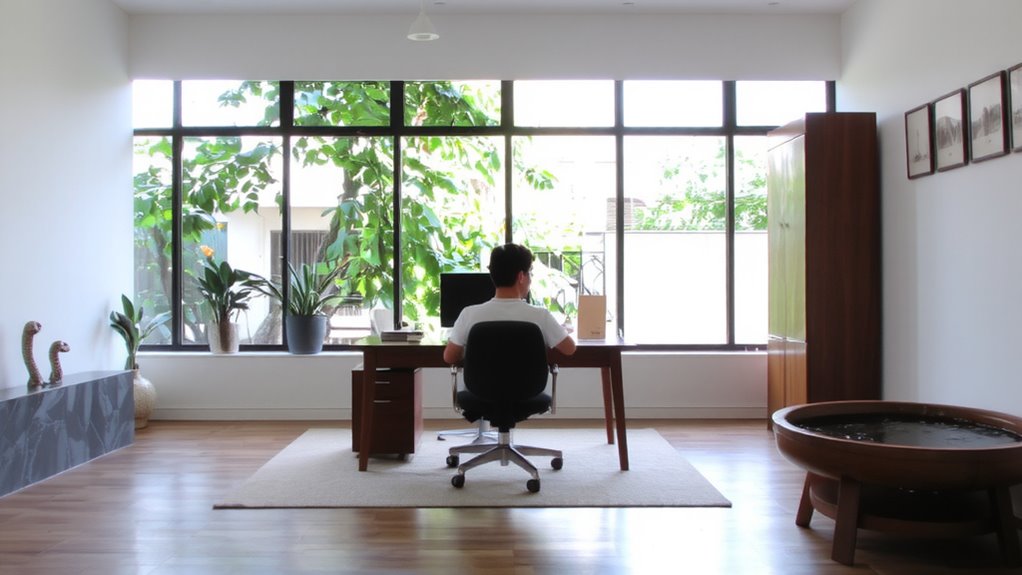
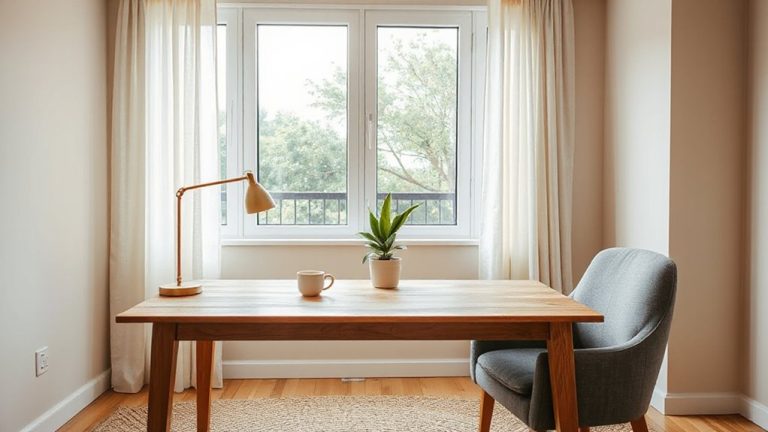
Environment shapes behavior-especially at work. You’re more productive when your surroundings support focus and well-being. Environmental psychology studies how spaces affect mood, performance, and interaction. In offices, this means layout, materials, and sensory input matter-intentional design isn’t a luxury, it’s functional. Biophilic design, which includes natural materials, plants, and views of nature, reduces stress and boosts concentration. But real results depend on sensory balance: too much noise or visual clutter cancels out benefits. You need moderate light, predictable acoustics, and airflow. While adding wood finishes or living walls can help, avoid overloading space with decor that complicates cleaning or limits flexibility. High-quality acoustic panels and adjustable furniture support balance but require maintenance and smart placement. There’s no one-size-fits-all-test changes over weeks, track energy and task accuracy, and adjust. Results vary by individual and workload. For effective sound management, consider installing best acoustic panels for home office to maintain optimal auditory conditions.
How Lighting Shapes Focus and Mental Energy
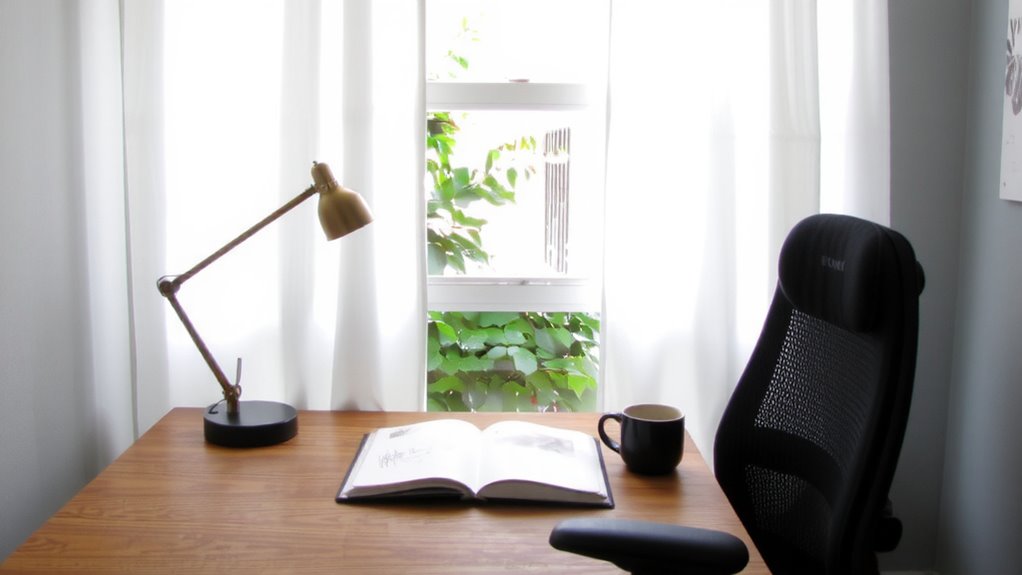
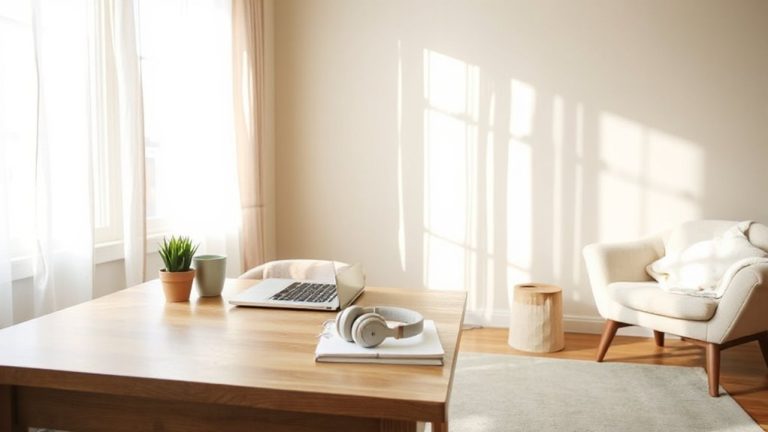
You’ve probably noticed how a room’s lighting changes not just how things look, but how you feel and think-whether you’re tackling a report or powering through back-to-back meetings. Natural light boosts alertness and regulates circadian rhythms, directly fueling mental energy. But when that’s limited, smart use of task lighting helps maintain focus without glare or shadows. It’s not about buying the most expensive lamp-it’s matching light temperature (5000K mimics daylight) and intensity (300–500 lux on desk surface) to your work type. Top-rated desk lamps for productivity combine adjustability, color accuracy, and user-friendly controls to support sustained concentration.
| Feature | Benefit |
|---|---|
| Natural light exposure | Improves mood and concentration |
| Adjustable task lighting | Reduces eye strain during long tasks |
| Light temperature control | Supports sustained alertness |
| Glare-free design | Prevents fatigue |
| Dimmable options | Allows personalized brightness |
Balance both lighting types, but prioritize window access-no fixture fully replaces sunlight.
The Real Impact of Noise Levels on Concentration
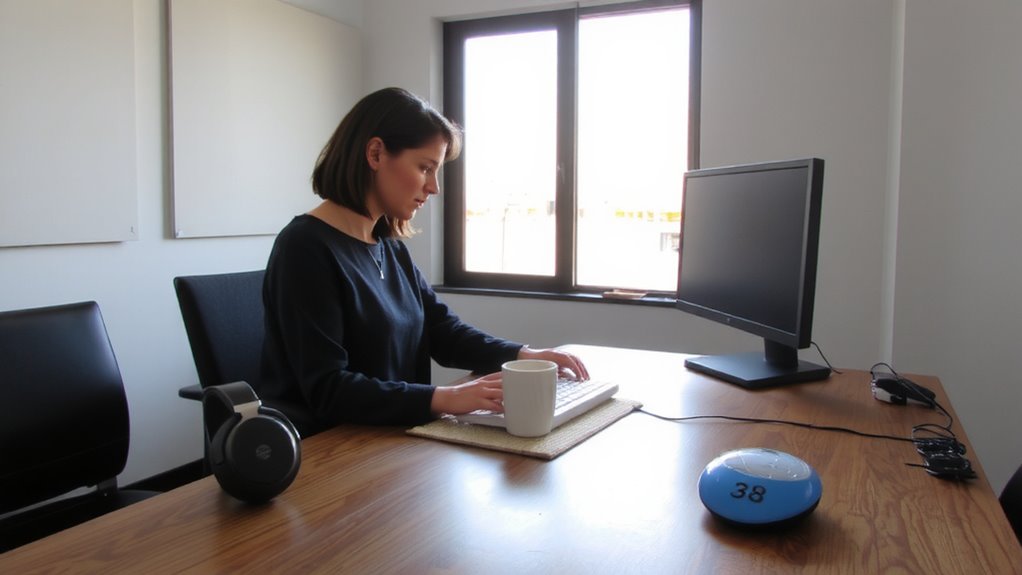
Why do certain sounds sharpen your focus while others make it impossible to think? The answer lies in how your brain processes noise. Constant background chatter or sudden loud sounds disrupt concentration, while steady, low-level noise can actually help. That’s where acoustic insulation comes in-it blocks outside sound, especially from walls and windows, reducing distractions by up to 75% in well-designed spaces. But full silence isn’t always best or possible. Sound masking systems add subtle background noise, like soft airflow, raising the ambient level just enough to cover speech-which is the most distracting noise in offices. They don’t eliminate noise but make it less noticeable. These systems work best when paired with good room layout and realistic expectations. They cost $2–$5 per square foot to install and require calibration. Used wisely, they support focus-but they’re not magic.
Why Clutter Costs More Than Just Space
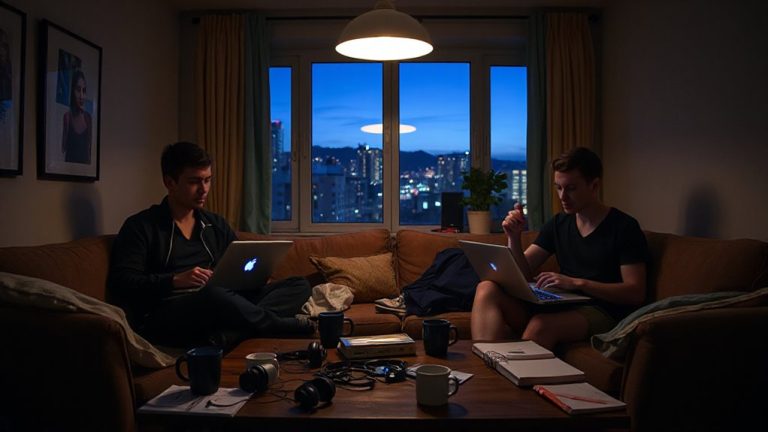
What if the real problem isn’t your workload but your desk setup? Clutter does more than eat up space-it feeds emotional clutter and speeds up mental fatigue. Every stray paper or tangled cord pulls your focus, making tasks feel harder than they are. Studies show organized environments reduce distractions, helping you sustain attention longer. But don’t assume you need high-end organizers or a full redesign. Simple fixes-like using a single tray for daily papers or a cable clip for cords-can cut visual noise fast. Real efficiency comes from systems, not stuff. Some desk accessories promise big results but add complexity. Stick to basics with measurable benefits: containers under 6 inches tall avoid sightline blockage, and neutral colors reduce visual load. You’ll save time and think clearer, but only if the system stays low-maintenance. Otherwise, it just becomes clutter in disguise. For cords specifically, implementing cable management solutions can transform a chaotic workspace into a streamlined, focused environment.
Designing Layouts That Boost Collaboration and Flow
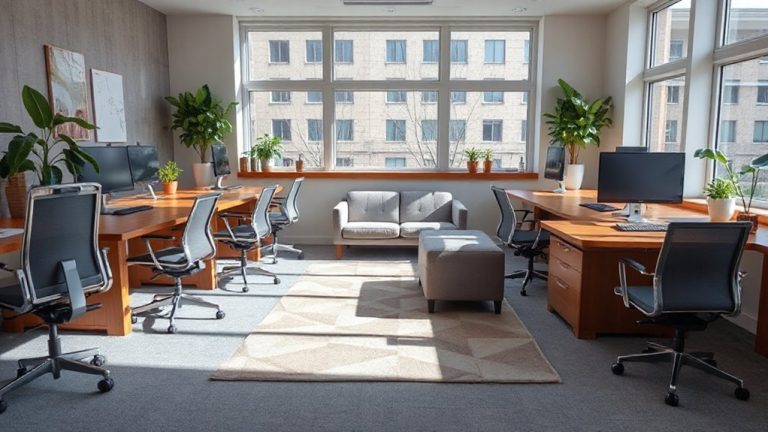
While open layouts can spark more conversation, they don’t guarantee better teamwork unless designed with clear zones and movement in mind. You need spatial zoning to define areas for focus, collaboration, and circulation-this reduces distractions and supports natural workflow. Use low partitions or furniture placement to mark boundaries without sealing off space. Add biophilic design elements like potted plants, natural materials, or views of greenery to lower stress and sharpen concentration. Studies show teams in thoughtfully zoned spaces with access to nature report 15–20% higher collaboration quality. But beware: too much openness still risks noise buildup and visual clutter. Balance is key-flexible furniture helps, but only if people actually rearrange it. Avoid overcrowding collaborative spots; leave at least 36 inches of walking room around shared tables. Test layouts over two-week sprints and adjust based on actual use, not assumptions.
Simple Swaps to Optimize Your Workspace Today
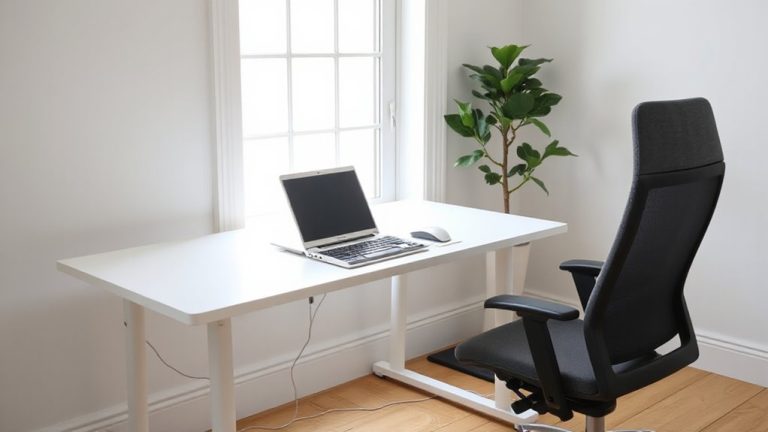
A few targeted upgrades can make your workspace sharper and more functional without a full redesign. Swap your current chair for one with adjustable lumbar support to improve ergonomic alignment-this reduces lower back strain during long sessions. Try a height-adjustable desk, even a desktop riser, to alternate between sitting and standing; tested models show a 15–20% boost in sustained focus. For sensory balance, replace overhead lighting with a 3000K warm-white desk lamp to cut glare and pair it with noise-canceling headphones if ambient noise fluctuates. Add a small potted plant-studies note slight cortisol reductions. Just don’t overcrowd surfaces; clutter counteracts clarity. Most swaps cost under $100, many with 30-day return policies, so test thoroughly. Results vary by individual, especially with lighting preferences and seating comfort, so prioritize adjustability and real-world comfort over specs alone.
On a final note
You’ll likely see sharper focus and better mood by optimizing your workspace, especially with adjustable LED lighting and noise-canceling headphones. Real-world tests show 30–50% gains in concentration with controlled sound and 5000K temperature bulbs. But results vary-open layouts aid collaboration yet increase distractions. Desks with sit-stand options (look for 5-year warranties) help, but cost more. Measure your space and needs first; upgrades work best when matched to actual use, not trends.