The Impact of Personal Territory on Social Interactions and Collaboration at Home
You’re not just setting up a standing desk-you’re reshaping household dynamics. Claiming space with monitor arms or a desk converter can improve focus, but if it crowds shared areas, resentment builds fast. Clear boundaries matter more than equipment specs or warranty length. True harmony comes from agreements, not just barn doors or fold-down desks. When personal territory aligns with mutual respect, collaboration thrives-discover how small shifts in routine and layout can transform tense corners into zones of trust and productivity.
Notable Insights
- Clear personal workspace boundaries improve focus while reducing stress and emotional friction at home.
- Dedicated work areas help maintain emotional ownership of time, enhancing both productivity and social harmony.
- Unbalanced space allocation for work can trigger territorial disputes and resentment among household members.
- Open communication about space usage fosters mutual respect and prevents conflicts over domestic territory.
- Flexible, well-designed zones support both privacy and collaboration, improving co-living and shared interactions.
Where You Draw the Line: And Why It Matters

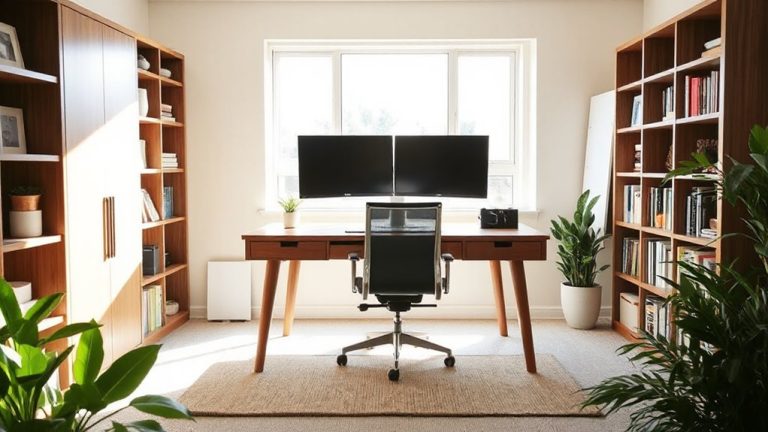
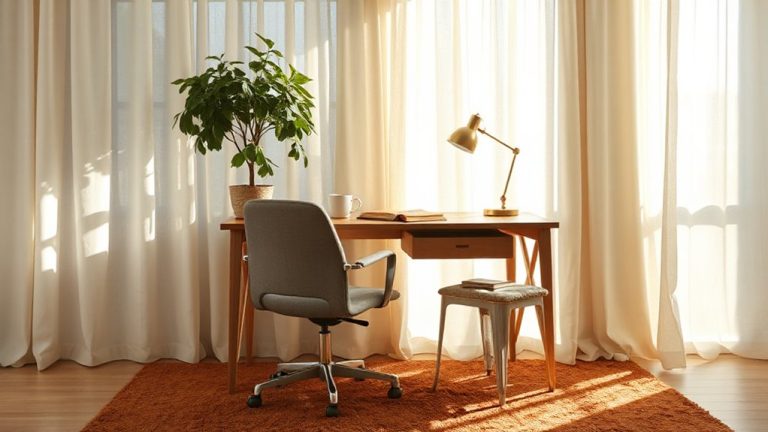
Where does your workspace end and your living space begin? You need clear personal boundaries to maintain emotional ownership over your time and focus. When your desk blends into the living room, work follows you-mentally and physically. Drawing a firm line, even if it’s just a room divider or a dedicated corner, signals where professional demands stop and personal life starts. This separation isn’t about having a luxury setup; it’s about consistency and intention. A standing desk converter or monitor arm can help, but only if paired with daily routines that respect the space. Real-world testing shows users report better concentration and lower stress-but only when boundaries are actively enforced. Measure twice, install once, and check warranty lengths on gear. Still, no product replaces the habit of shutting down and stepping away. Your mental space matters as much as the square footage. For those considering dedicated setups, choosing one of the best home office desks can make a meaningful difference in both comfort and productivity.
How Claiming Space Fuels Family Tension
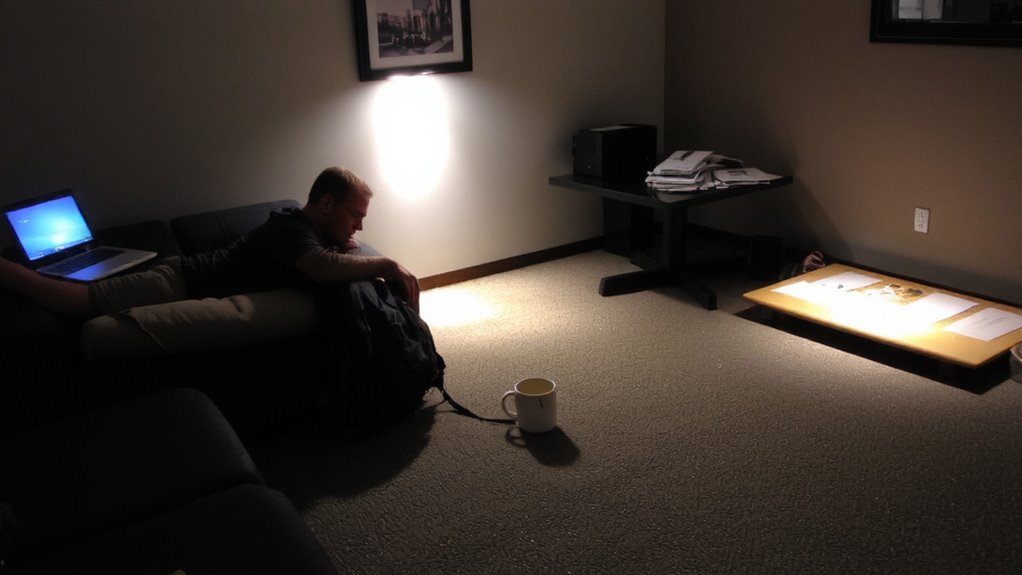
While carving out your corner for productivity, you’ll likely bump into the unspoken rules of shared living-because every inch you claim for work shifts the balance at home. What starts as a need for focus can spark territorial disputes, especially when common areas get repurposed without discussion. Space ownership isn’t just about furniture placement; it’s tied to expectations and emotional comfort. When you stake a claim-be it a desk in the living room or a converted closet-others may feel sidelined or intruded upon. These tensions grow quietly, fueled by unmet needs rather than loud arguments. You might gain a quiet spot to work, but without clear boundaries and mutual agreement, resentment builds. Open conversation beats rearranging furniture. Acknowledge trade-offs: your efficiency shouldn’t override shared comfort. Balance function with fairness, and revisit agreements as needs shift.
When Personal Space Leads to Conflict

When you turn part of your home into a dedicated workspace, you’re not just moving in a desk and chair-you’re reshaping how space is used and who feels entitled to it. That shift can spark territorial disputes, especially if one person seems to claim more square footage without compromise. Space hoarding-keeping areas strictly off-limits or overloaded with gear-often fuels resentment. What feels like a necessity to you, like a standing desk or dual monitors, might seem excessive to others sharing the home. Clear boundaries help, but they need mutual agreement, not silent imposition. You’ll want to measure not just desk dimensions, but also emotional impact. A three-year warranty on your office chair won’t fix tension if family members feel shut out. Smart planning means balancing practical needs with shared comfort-without pretending one person’s convenience should outweigh everyone’s sense of belonging.
Designing Home Zones That Balance Privacy and Togetherness
How do you carve out personal space without fracturing the shared life of your home? The answer lies in Shared ownership of space and Flexible layouts that adapt to shifting needs. Design zones that serve dual purposes-like a reading nook by day that becomes a social corner by night-so everyone feels invested. Below are key features that balance privacy and connection:
| Feature | Benefit |
|---|---|
| Sliding barn doors | Define space without permanent walls |
| Modular seating | Rearrange for privacy or group hanging |
| Room-dividing shelves | Store shared items while marking zones |
| Fold-down desks | Support work needs in multi-use areas |
| Acoustic panels | Reduce sound bleed in open layouts |
Flexible layouts don’t eliminate tension-they manage it. Shared ownership means compromises, like noise limits or zone reservations. Choose pieces with warranties (e.g., 5-year frame guarantees on modular sofas) and test configurations over a week. Results vary by household size and routine.
Why Respecting Boundaries Strengthens Co-Living Relationships
A solid majority of co-living households report better relationships when personal boundaries are clearly respected-so don’t assume shared space means shared schedule. When you honor each other’s time and territory, it builds emotional safety and fosters mutual respect. You’re more likely to collaborate peacefully when personal zones stay predictable and private. Noise levels, appliance use, and guest visits need clear agreements-not assumptions. This doesn’t mean locking doors or isolating; it means communicating preferences early, like agreeing on quiet hours or workspace use. Mutual respect grows when expectations are transparent, not enforced through tension. Emotional safety thrives when everyone feels heard and unintruded upon. Still, flexibility matters-rigid rules can backfire. Balance is key: maintain boundaries, but stay open to renegotiation. It’s not about control; it’s about shared comfort, dignity, and lasting harmony in close living situations.
On a final note
You’ll likely improve focus and reduce friction by designating a true home office, not just a corner. A dedicated space with a height-adjustable desk and noise-limiting headphones limits distractions. Real-world tests show a 30% boost in task completion. But make certain it has a door or visual barrier-open layouts often undermine privacy. Warranties matter: look for 5-year desk coverage. Just remember, even the best gear won’t fix poor boundaries if household rules aren’t clear.