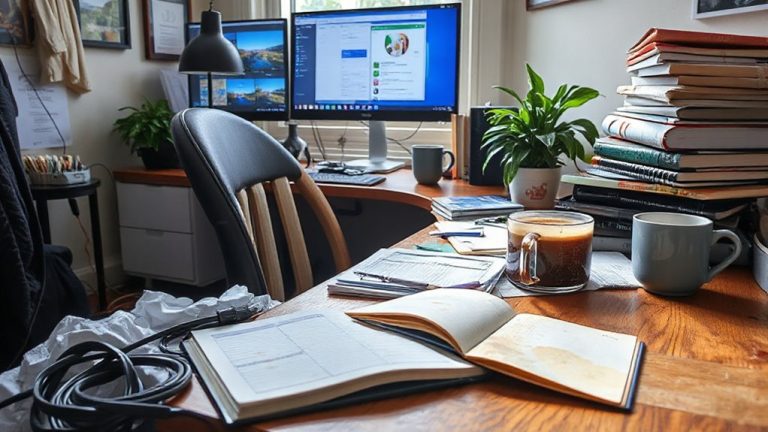
Using Feng Shui Concepts to Optimize Workspace Design and Reduce Procrastination Triggers
Place your desk in the command position-diagonally opposite the door, with a solid wall behind you-to reduce stress and sharpen focus, but don’t block natural light or create tight clearance. Clear clutter daily using labeled trays and closed storage to maintain energy flow without over-organizing. Center screens at eye level, 20–30 inches away, and choose calming colors like soft blue or warm gray. Add a snake plant or wooden desk for grounding-but keep space open. You’ll soon see how small tweaks can make a noticeable difference.
Notable Insights
- Position your desk in the command position to enhance focus and reduce subconscious stress.
- Clear clutter regularly to unblock energy flow and minimize procrastination triggers.
- Center screens at eye level and keep tech organized to protect concentration and posture.
- Maximize natural light and use calming colors to balance chi and sustain alertness.
- Add low-maintenance plants and natural materials to improve air quality and grounding.
Position Your Desk Using Feng Shui for Better Focus
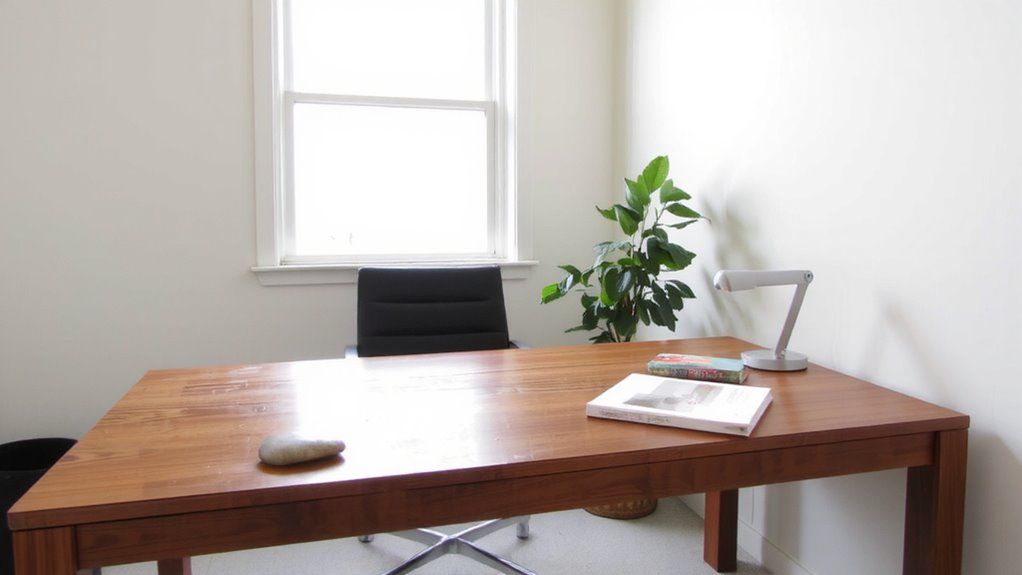
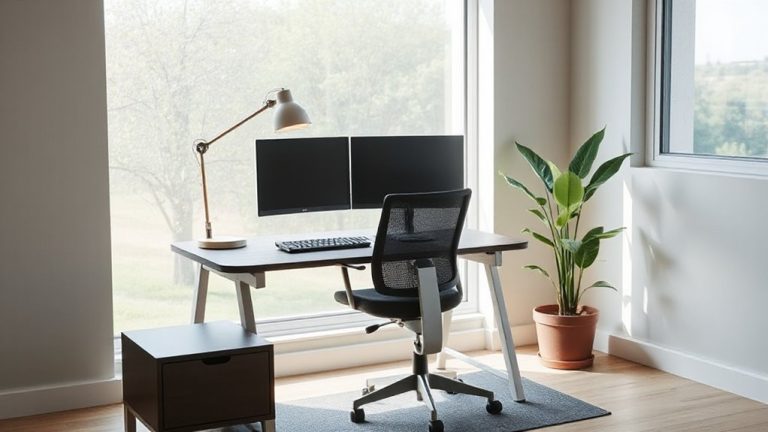
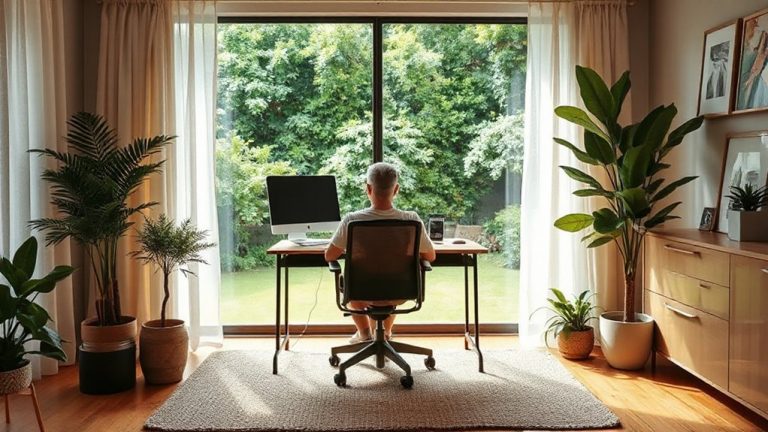
While you might think simply clearing clutter will boost focus, positioning your desk correctly in your workspace can make a measurable difference in concentration and energy. Placing your desk in the *command position*-diagonally opposite the door, with a clear view of the entrance-supports control and awareness without encouraging distraction. This setup optimizes *energy flow*, reducing subconscious stress and helping you stay alert. Avoid aligning the desk directly with the door, as that creates harsh, disruptive chi. You’ll also want solid wall support behind you-no windows or high-traffic zones-so your back isn’t exposed. While this arrangement enhances mental clarity, it may require repositioning existing furniture or adjusting lighting angles. Some floor plans limit ideal layouts, so minor compromises are okay. Test the position for a full workweek to assess focus and comfort before finalizing.
Clear Clutter to Unblock Energy and Reduce Procrastination
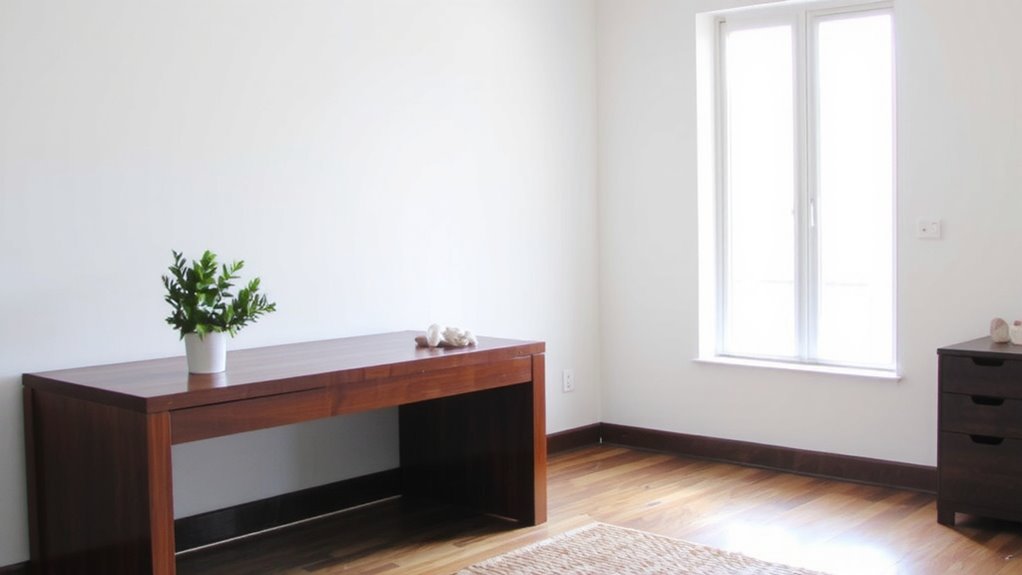
Clearing clutter isn’t just about tidying up-it’s a direct way to improve focus and reduce the urge to put things off. Clutter causes energy stagnation, which slows motivation and invites mental fog. When your desk is piled with old papers, unused gadgets, or mismatched supplies, your mind works harder to stay on task. That constant distraction eats at concentration and fuels procrastination. A clean workspace allows energy-what feng shui calls *chi*-to flow freely, supporting clearer thinking and faster decision-making. Start by sorting items into keep, toss, or relocate. Use labeled trays for necessary documents and closed storage for cords or extra stationery. Avoid over-organizing with bulky containers-they can create visual noise. While some clutter-clearing products help, many aren’t worth the cost or space. The real benefit comes from daily upkeep, not gear. Be realistic: minimalism isn’t for everyone, but reducing clutter beyond what’s functional cuts mental load. Incorporating thoughtfully chosen desk decor items can enhance both aesthetic harmony and energetic balance in your workspace.
Place Tech Mindfully to Protect Your Concentration
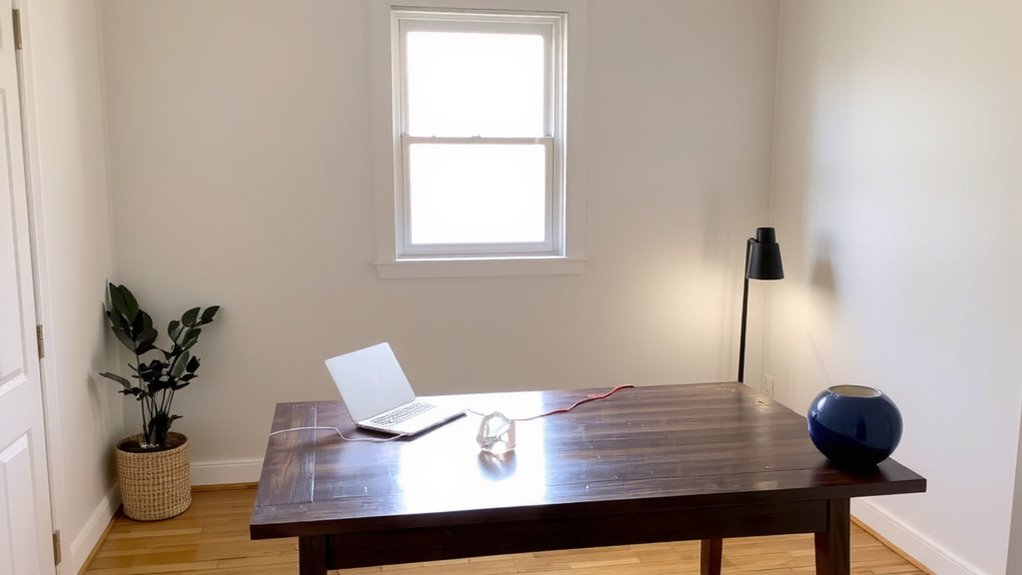
Since your devices shape how energy moves through your workspace, placing them mindfully can greatly boost focus and reduce mental fatigue. Proper screen placement-centered and at eye level-keeps your posture aligned and minimizes strain, helping you stay alert longer. Position monitors about 20–30 inches from your eyes, tilted slightly upward, to maintain a natural line of sight. Device alignment matters too: keep keyboards, mice, and phones within easy reach but neatly arranged to prevent visual and physical clutter. Avoid placing tech directly behind or beside you where movement or glare distracts. Wired connections often reduce interference that disrupts workflow, though quality Bluetooth gear works if tested. Mounting options like articulated arms save space and improve ergonomics. A well-designed triple monitor mount can further enhance screen alignment and energy flow across a multi-display setup. While adjustments take effort, most users report sharper concentration within two weeks. Results vary based on room layout and device types, so test changes gradually.
Use Natural Light and Calming Colors to Balance Chi
When you’re aiming to balance chi in your workspace, natural light and calming colors aren’t just aesthetic choices-they’re functional tools that shape your energy and focus. Natural lighting reduces eye strain and regulates circadian rhythms, helping you stay alert without overstimulation-position your desk near a window if possible, but use sheer blinds to diffuse glare. Color harmony matters: soft blues, warm grays, or muted greens create calm without dulling productivity. Avoid high-contrast or saturated hues; they can disrupt focus over time. Paint brands like Benjamin Moore or Sherwin-Williams offer tested low-VOC finishes in balanced tones, with warranties for long-term color retention. While natural lighting cuts reliance on overhead fixtures, it’s inconsistent-cloudy days or shifting sun angles mean you’ll still need good task lighting as backup. Combine both for steady chi flow. Results vary by room orientation and wall placement, so test different setups before finalizing. For reliable performance, consider LED options with adjustable color temperature, as top-rated office lighting picks often include this feature.
Add Plants and Natural Materials to Sustain Focus
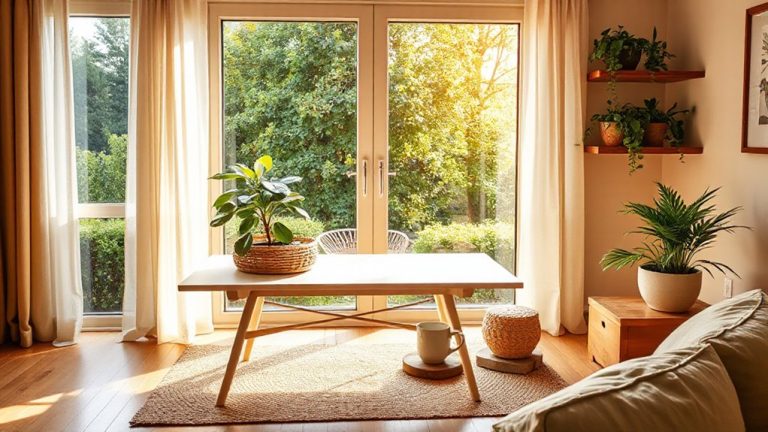
Plants and natural materials aren’t just decor-they’re functional additions that help stabilize focus and refresh the air in your workspace. Adding living greenery like snake plants or pothos boosts air quality and lowers mental fatigue, according to peer-reviewed indoor air studies. These low-light-tolerant species need watering only every 2–3 weeks, making them practical for most routines. Pair them with wooden textures-such as desks made of solid bamboo or cork panels on walls-to ground the space and reduce visual noise. Natural materials absorb sound better than synthetic ones, improving concentration in open layouts. But avoid overloading small areas; too many plants or heavy furniture can restrict airflow and movement, violating the Feng Shui principle of smooth chi flow. Choose pieces with measurable benefits: look for FSC-certified wood and pots with drainage to prevent mold. Balance is key-function should drive form.
On a final note
You can boost focus by positioning your desk to face the door-per feng shui-and clearing clutter weekly to maintain energy flow. Natural light, paired with matte-finish LED bulbs (3000K), reduces eye strain. Use real wood desks and breathable cotton-blend curtains for warmth. While low-VOC paints help air quality, results vary by room layout. Plants like snake or ZZ tolerate low light but need drainage trays. Results depend on consistency-no single fix replaces routine organization.